betahaus, Prinzessinnenstrasse 19-20
A cutting-edge office: In our conversations with contemporaries, we examine the claims, clichés and ideals that circulate about our workplaces. This time, Madeleine v. Mohl, co-founder of betahaus in Berlin, explains both how her idea of an office works and how offices function in betahaus. Interviewed by Brigitte Schedl-Richter.Office in progress with an open end
Betahaus is a team project in the best sense of the term. Founded by a team just two years ago, betahaus has been watched over, organised and developed by the same team. The team is comprised of Max v.d. Ahé, Tonia Welter, Gregor Scheppan, Christoph Fahle, Stephan Bielefeldt and Madeleine v. Mohl. The latter is our interview partner, responsible for user requests, press and sponsoring at betahaus and armed with a wealth of experience in communication and strategy. She gather this experience during and after her history and German studies by working on public, political and Web 2.0 projects.
The concept of the "co" prefix springs from this team – betahaus offers "coworking" in the middle of Berlin. Specifically, this means office space for creatives that is temporary, flexible, "cooperative". Or to put it another way – versatile working spaces that are designed for new and individual forms of work.
Ms. v. Mohl, how did the betahaus come into being?
v. Mohl: Actually, it came into being purely as an end in itself. My colleagues and I have always worked on many projects that regularly required different working conditions. Sometimes the teams were large or small, sometimes intense and concentrated, at other times sporadic in their collaboration. You just need the right spaces for this kind of work, and at some point we asked, "Why aren't there office buildings for this kind of work?" In addition, we weren’t alone in asking this, and we knew several people who were experiencing similar situations. That was the initial spark. We wanted to create office spaces in accordance with our own ideas, spaces where we felt comfortable. And at the same time, we wanted to invite other people who think in the same ways, who are looking for contact and an open atmosphere, who aren’t afraid of contact, even if they work in the same industry, people who believe that a "physical" platform for networking is important.
And the concept has obviously taken off?!
v. Mohl: And how – faster than we thought! The demand really surprised us. In 2009, we started with an old office building in Kreuzberg with 200 square meters. Today, the betahaus is 1,200 m2, and we’re already thinking about adding another floor.
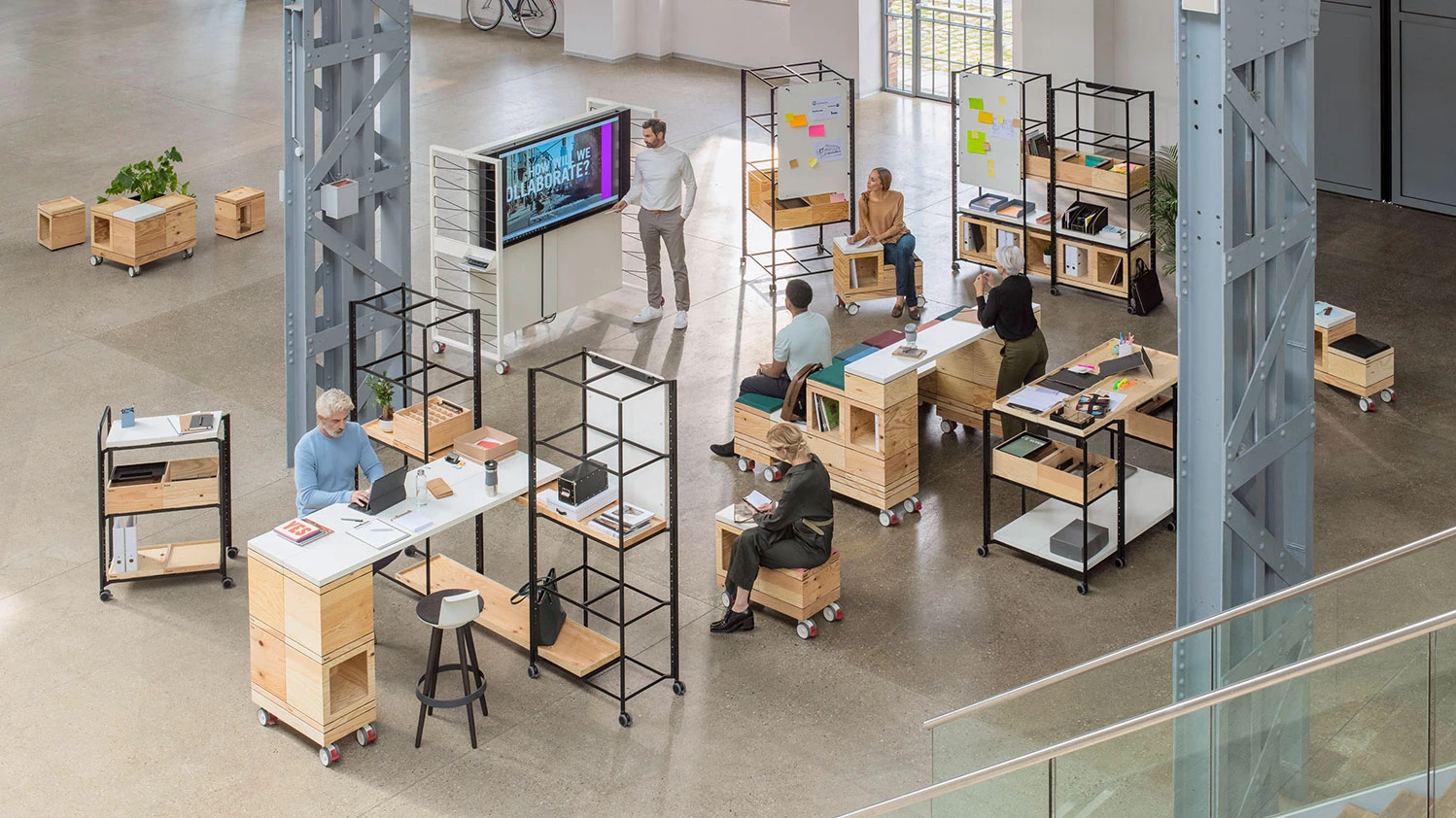
This size offers several advantages, and the infrastructure at betahaus has become quite diverse. The ambiance and functionality of the spaces range from a Vienna coffee house to a library, WLAN café, home office and campus. In other words, here you'll find a place for quiet, concentrated work, as well as a space for communication. The furniture enables flexible work – whoever wants to can use the sofa as an office lounge, an easy chair for a confidential discussion, or send a quick email at the espresso bar before the pasta is served. And as you know, this kind of working completely reflects the times we live in. Value creation occurs ever more frequently outside of the traditional office: at the train station, in a café, at home, or in coworking spaces like betahaus in Berlin.
So this means that people come and go as they like, and enjoys a high-quality infrastructure...?
v. Mohl: Yes. And the infrastructure of course has to be organised in a completely professional way because "democratic" models don't work here. Whoever wants to join betahaus can choose the different options that correspond to their work style: equipment includes a desk, printer, VoIP telephone, WLAN, access to well-equipped meeting rooms, a telephone room, your own post box, etc. The length of the rental is organised by tickets for days, weeks, or months, full-time or part-time – with or without your own key, depending on whether you need to get into the office around the clock or not – and you can choose any space within 1000 m2 and two floors. Currently, the 12-day ticket is an absolute hit. Which means that a lot of people work part of the time at home and then come in for social contact, team work and networking in betahaus; this creates a really diverse mix.
Which industries do your clients come from?
v. Mohl: It’s striking how many creatives there are, such as graphic designers, programmers, photographers, architects, designers, journalists, translators, start-ups and workshops – but we also have attorneys, bookkeepers, NGOs and others. In principle, everyone works for themselves, but of course there are synergies that develop. So it often happens that people receive support from other coworkers for a project. At present, there are around 120 freelancers in betahaus Berlin Kreuzberg. A third of them have a fixed desk here or a community office; the others use temporary desks and come back at regular intervals. By the way: the people who actually come back are all the same kinds of people. Because those who like to work alone and separately don’t like it here, even though we make sure that there is a certain "private sphere," that noise is kept to a moderate level, etc.
Where do you have your office?
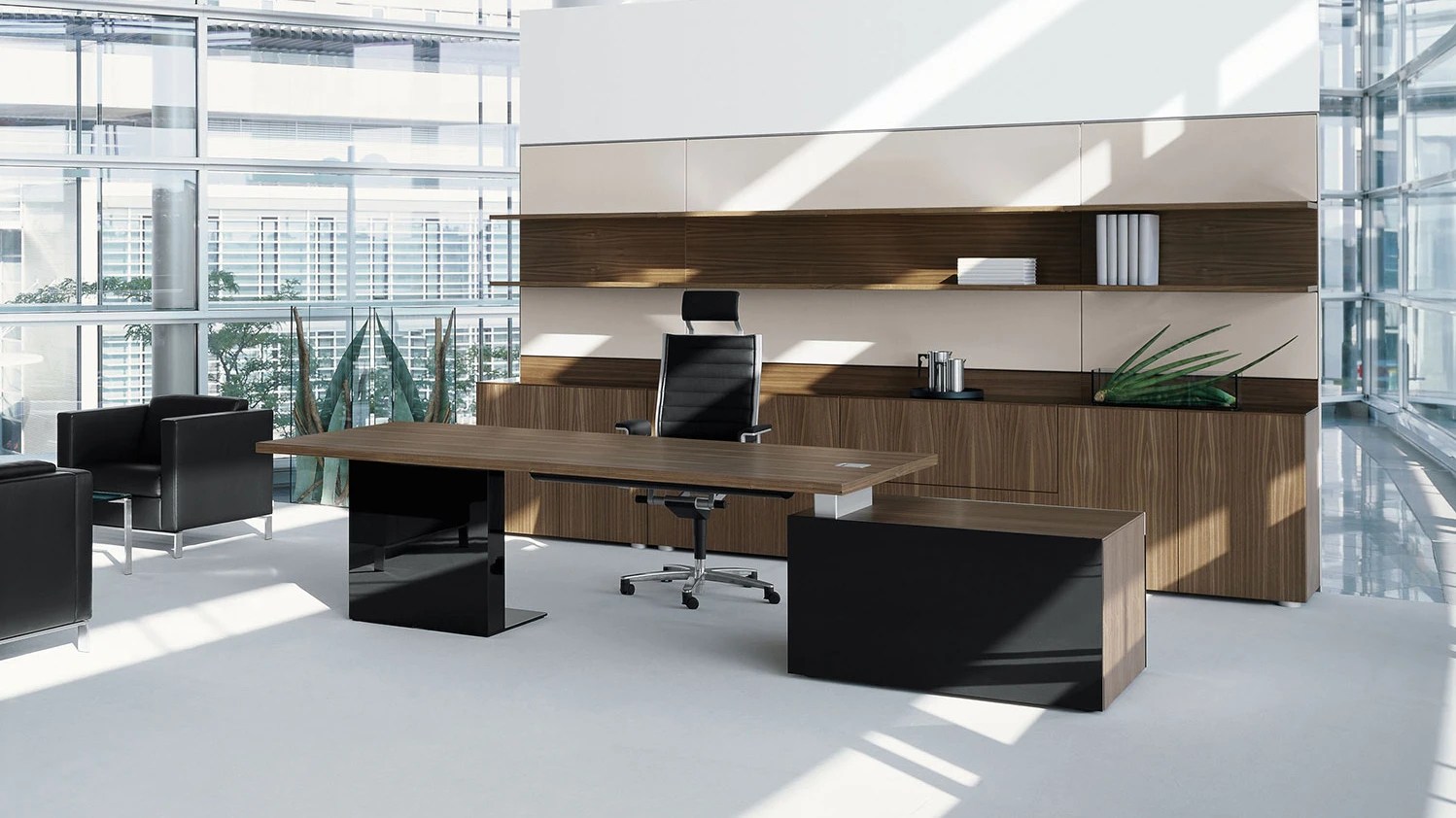
v. Mohl: Well, in betahaus, of course. We have a kind of control centre here, not really that big a workplace, I would say. A couple of tables and cabinets. Essentially, my office is my laptop, and I work wherever I need to. Nonetheless, whenever I work at a desk, the view is very important to me. It always has to be a consciously chosen vantage point. Also, I like to rearrange things. That means I always have to be able to move my workspace around!
And how does the future look for betahaus?
v. Mohl: We already have concrete plans for how to move forward. Aside from the pleasing developments in Berlin, we’ve got our eye on three more locations: Zurich, Hamburg and Lisbon. In Zurich, we have already found two totally committed partners (or, better said, they found us); they absolutely want to implement our concept and they know their market, so they are able to assess the opportunities. Hamburg would just fit perfectly because of the scene there. And Lisbon was actually always a dream that we’ve had. Sitting on a beach in the south, thinking about great creative projects... In the meantime, we've found partners in Lisbon, and the prospects look quite realistic. We aren’t going just anywhere and saying, "Let's try it here". There's always a lot of preparation, specific things get checked out, market observations and economic analyses. Because even creativity needs a reliable foundation.
Thank you for the interview.