Caution + confidence = ORGATEC 2010
About two years after the financial crisis, eyes turned from October 26-30 to Orgatec, the office furnishing trade fair in Cologne, where the focus was on "the office - a key factor for success". There wasn’t a major new trend, but the designs for new kinds of work are assuming clearer and more diverse forms: offices are being planned like city landscapes, with areas for work, communication and regeneration.The mood was one of restrained confidence in a heavy-hit industry, even though the major trade fair booths received a lot of visitors and the evenings were dominated by a high-spirited party atmosphere. A total of 608 manufacturers from 41 countries, including almost all of the leading firms, presented several new products at the most important trade fair for office and building design. Approximately 61,000 visitors from various countries came, which thankfully was much better than in recent years. They didn’t really find any really new trends, but one megatrend was definitely noticeable:
Office landscapes like urban landscapes
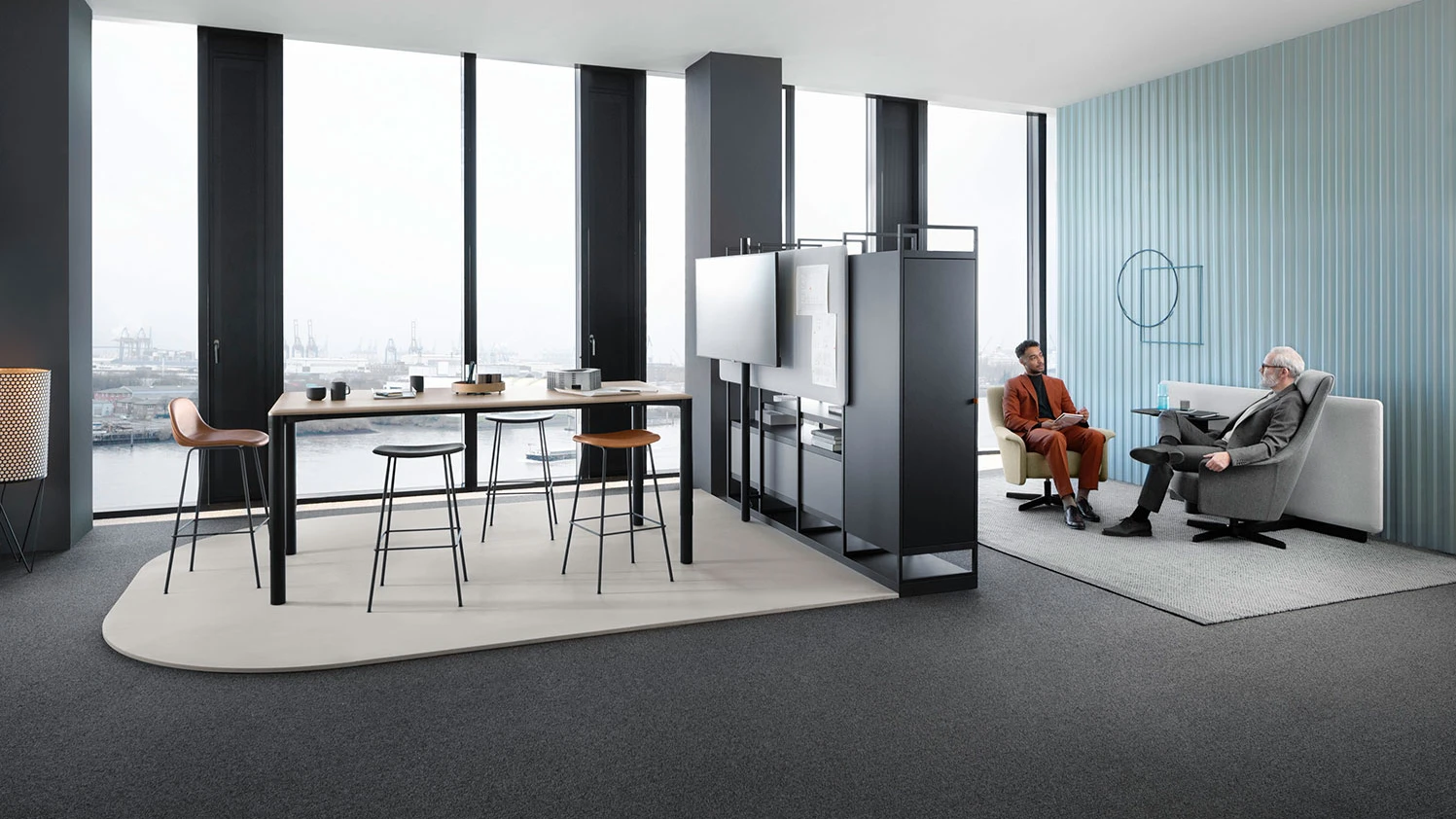
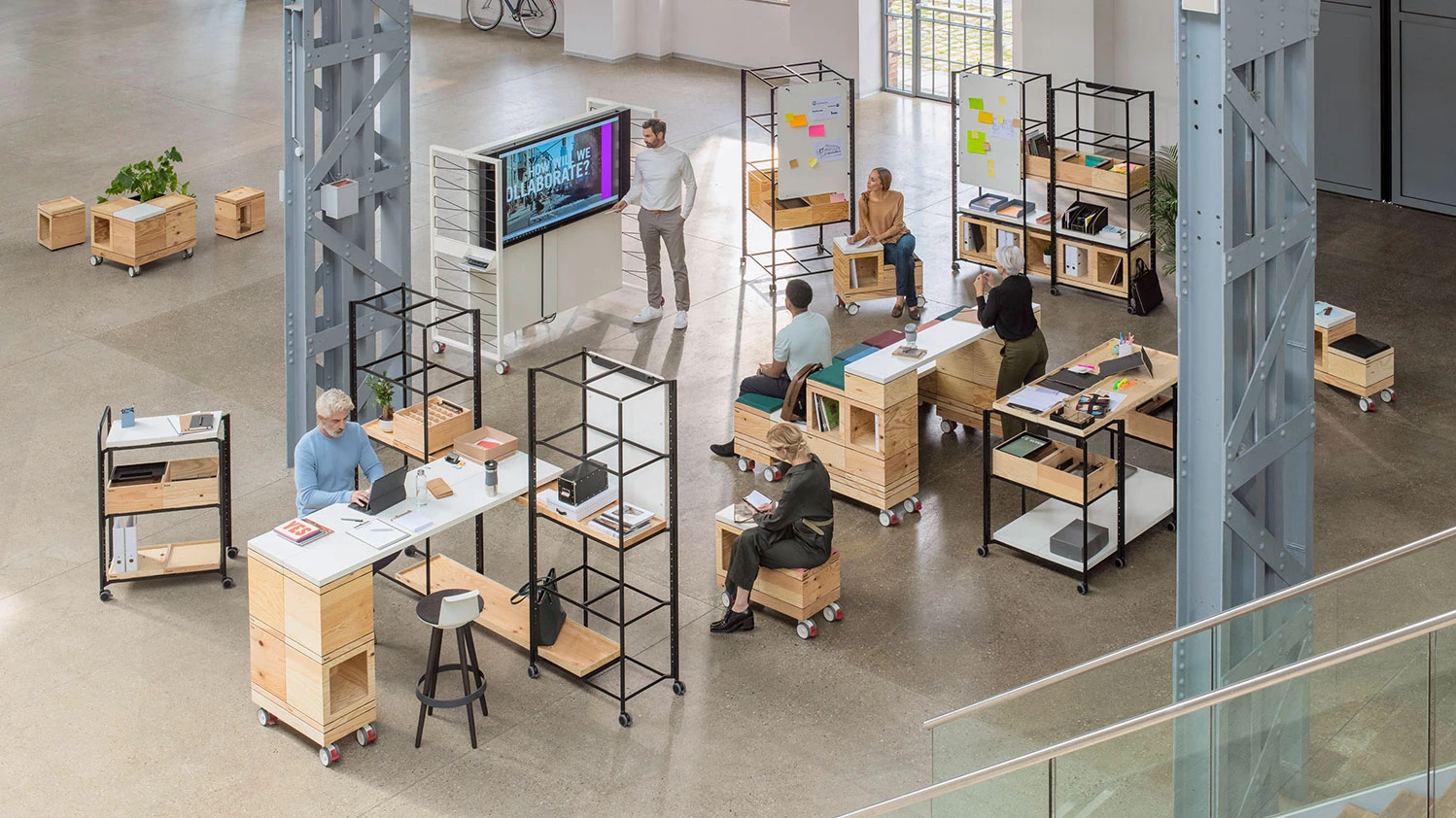
The design of some trade fair booths, such as Bene and Vitra, demonstrates that office landscapes today are as diverse, inspiring and varied as urban landscapes. The office is understood as a living space, divided into different zones and areas as individual as its users’ forms of work. Open office layouts reflect the trend towards more communicative and cooperative work styles. This is why intelligent furniture and systems for partitioning and dividing spaces are in such demand: They should create interesting structures, be flexible, offer views and privacy at the same time, both in acoustic and visual terms.
In general, the trend is heading towards the creation of multifunctional areas in the office that can be adapted as needed to meet diverse requirements. Inspired by parks and public squares in cities, different companies presented complete furniture systems that can be used for work that requires concentration as well as team work, meetings, reception areas or relaxation. Nearly all of the major companies presented a concept along the lines of ‘multifunctional working landscapes in the open office’.
Openness, yet with spaces for privacy
In 2006, Vitra brought an innovative product to market with the high-back sofa "Alcove" by the Bouroullec brothers. Four years and two Orgatecs later, there were several imitations, new interpretations and further developments on display. Just in time for Orgatec 2010, several other manufacturers followed this trend and developed product concepts for central areas and informal open working landscapes that establish both zones and private areas.
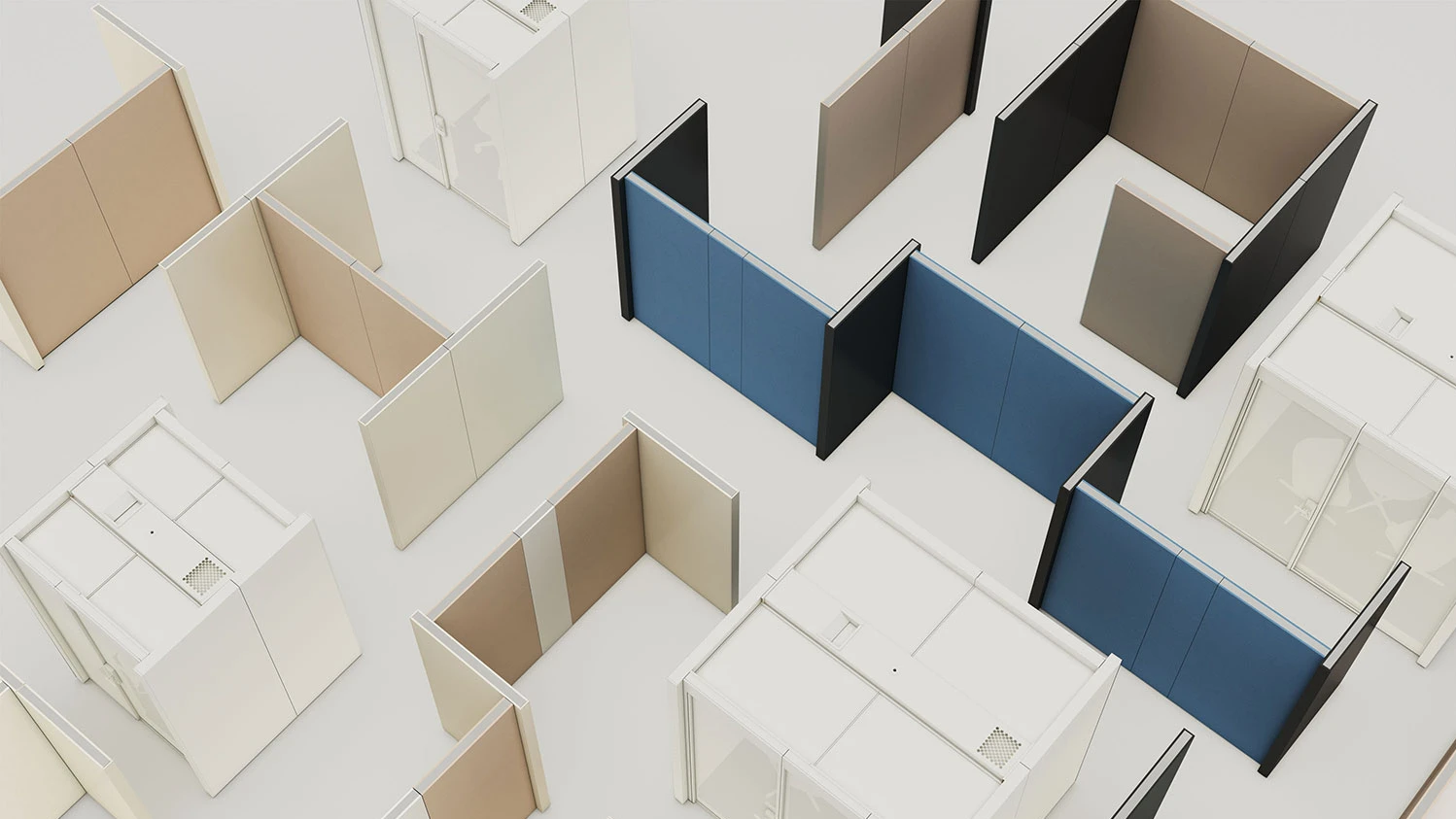
With their Communal Cells, also designed by the Bouroullecs, Vitra reinterpreted the long-scorned cubicle: acoustically effective walls that partition the Open Space Office, creating lively social meetings points, such as coat racks, printer islands, or Coffee Corners.
PARCS for the Open Office
With the London design duo PearsonLloyd, Bene expanded on the idea of zone-creating seating and work furniture. In 2009, Bene launched a trailblazing furniture set for informal, multifunctional working zones in the Open Office. PARCS offers, alongside the "wingback seats" of the Wing series, numerous additional product elements such as Toguna, Causeway and Media Walls, all of which support communicative and collaborative work in new and efficient ways – and can be networked upon request, of course. PARCS offers elements that create and partition spaces at the same time, provide acoustic shielding and visual screening, and thereby create a completely new sense of work: their design invites people to feel good.
Phone Booth: revival of a classic
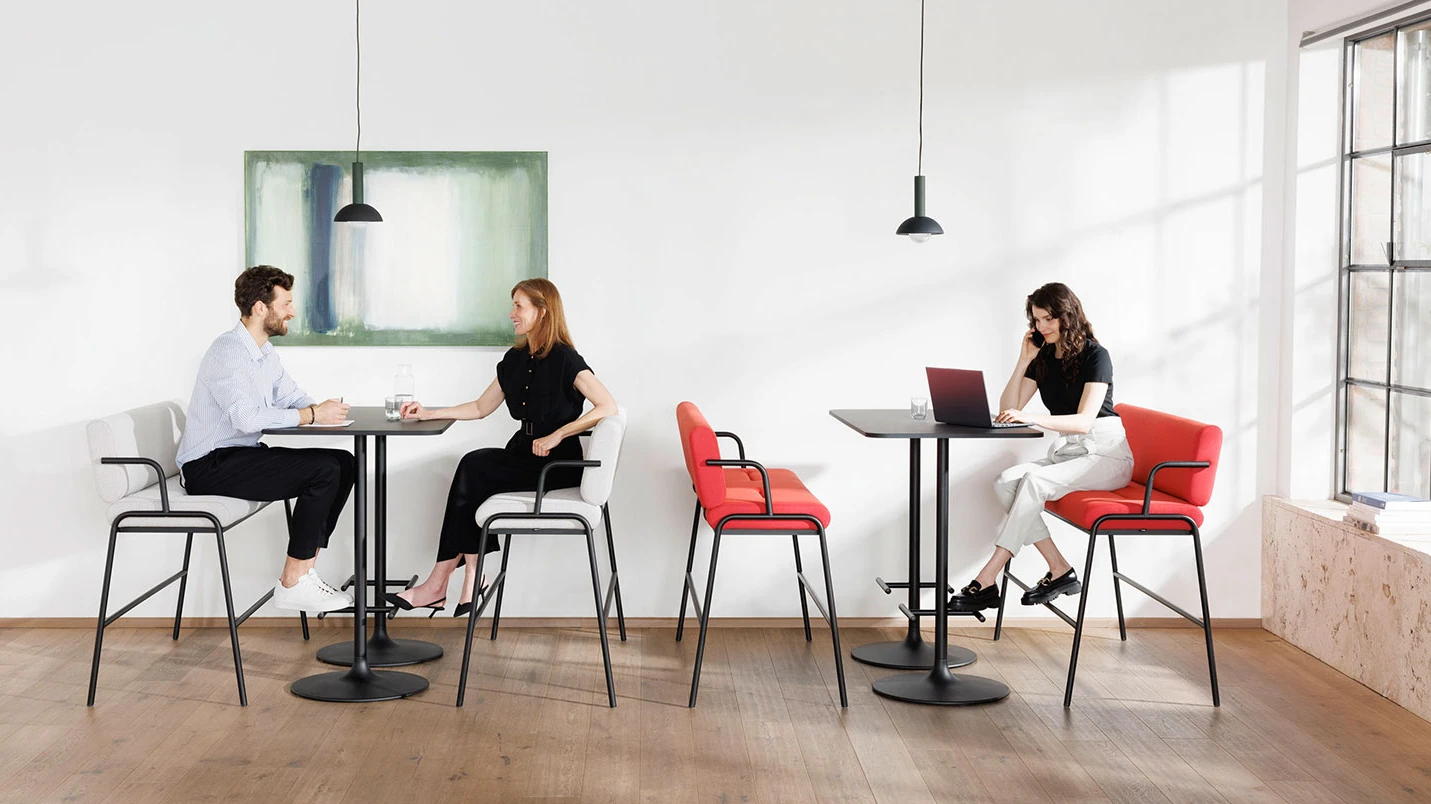
A highlight among the new products is the Phone Booth – a completely new furniture typology for the office. It offers a short-term location, acoustically and visually shielded, for mobile telephone users who want to escape their workstation.
Small, ambitious manufacturers such as Buzzispace.com or Prooff discovered this need and also developed their own smaller version of protected spaces for telephoning.
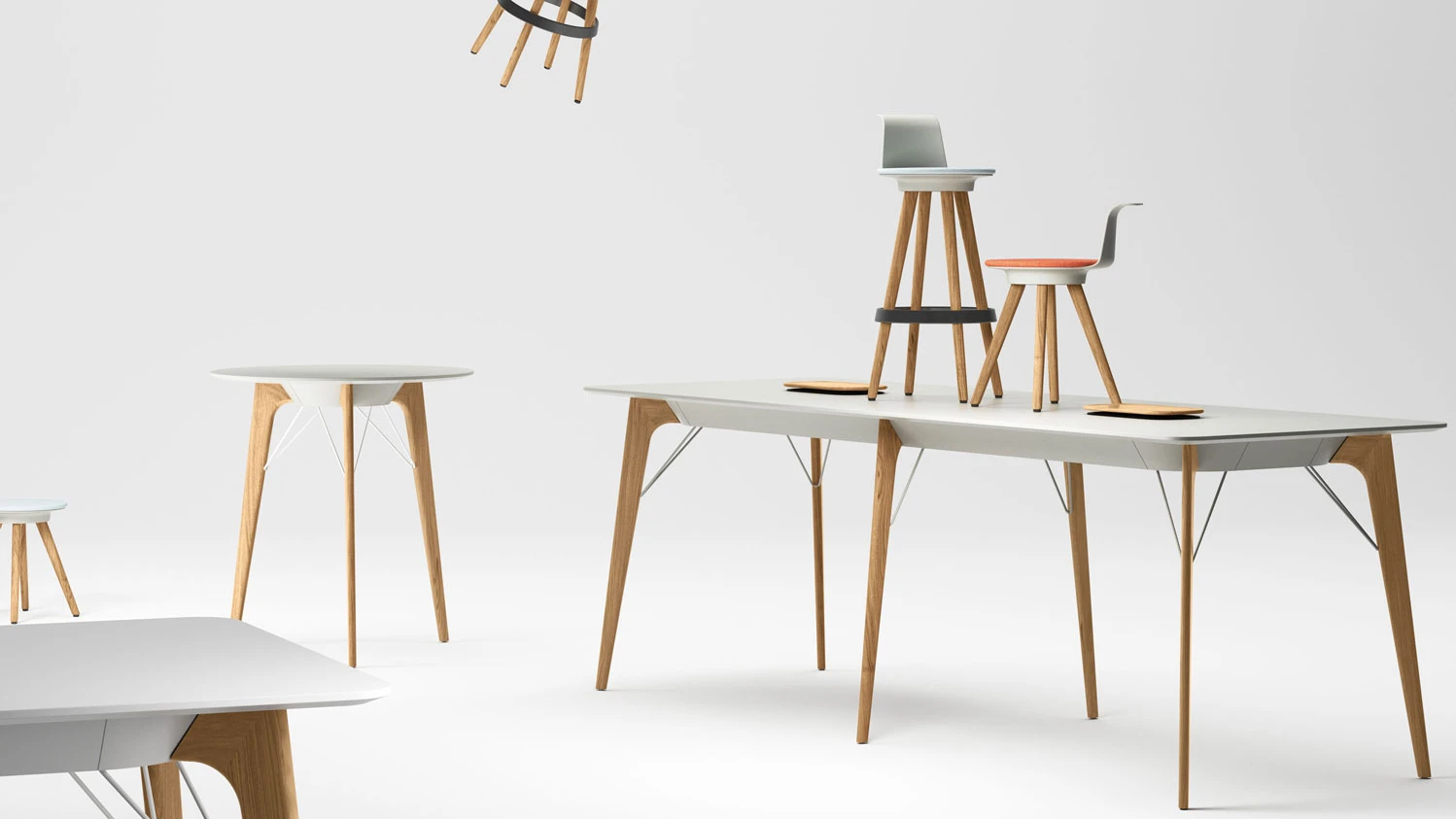
Prooff has also created an interesting table-chair hybrid that invites a variety of uses and has a very attractive sculptural character.
State of the Art: media integration
Diverse, easy to use and with a subtle appearance – that’s what today’s media integration should be. For example, Bene demonstrated new possibilities for controlling technology: an iPhone and iPad application is enough to control all of the technology in a conference room. Functional and easy for users.
Walter Knoll also displayed a very clever media wall with an integrated camera for video conferences. Holzmedia offers a modular Telepresence System for video conferences.
Strong trends in colours and materials: white and walnut
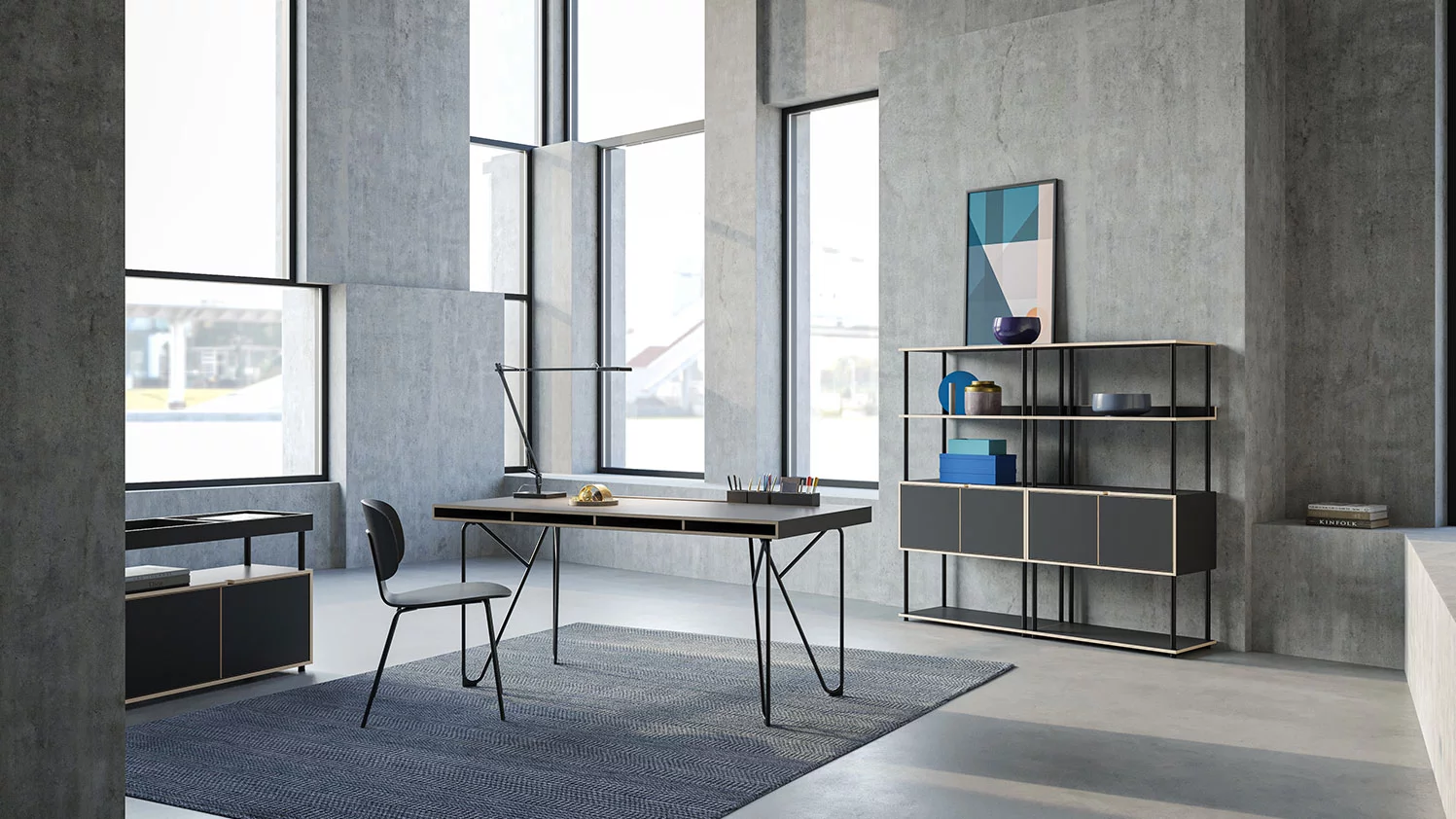
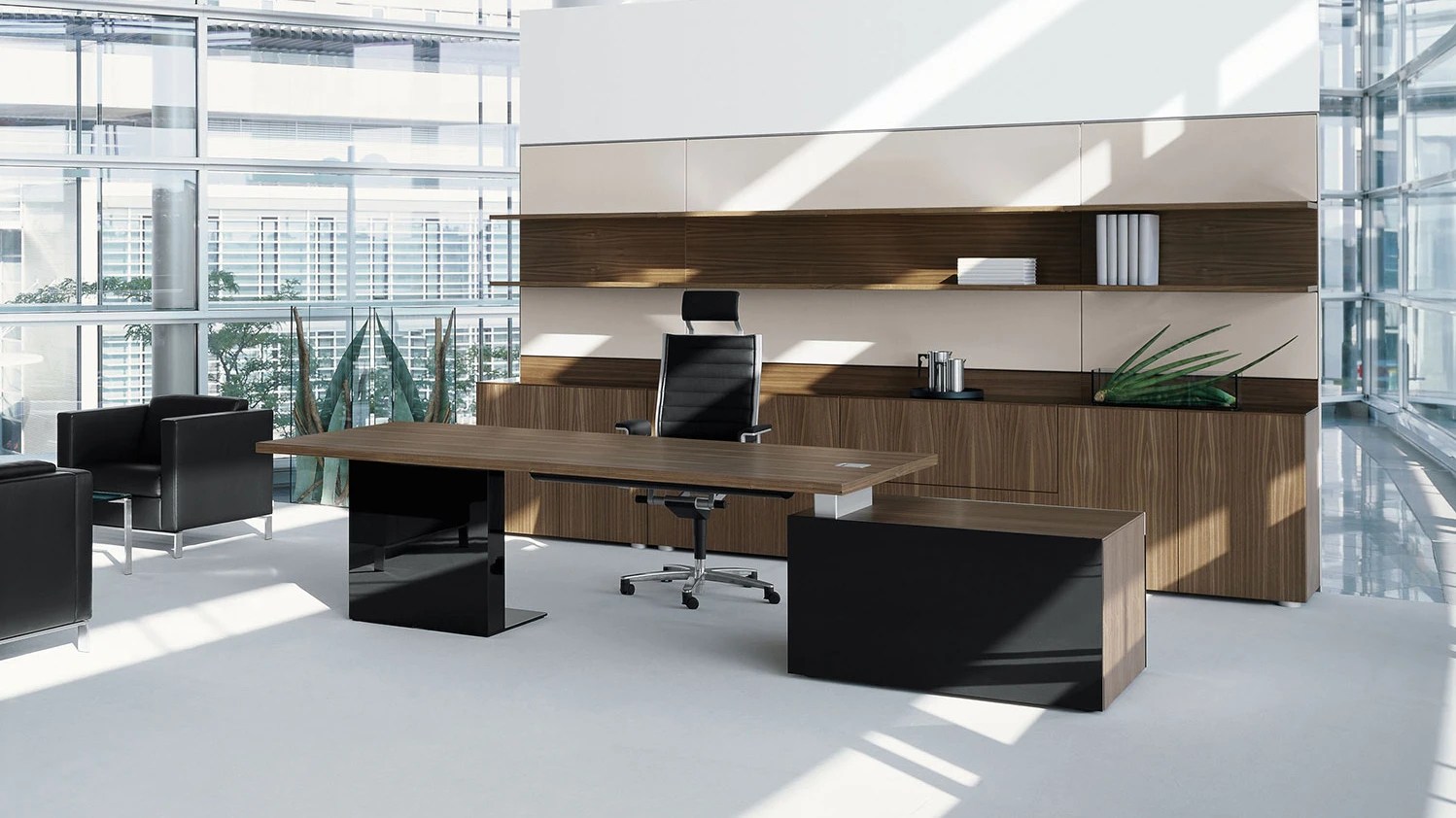
After an exuberant boom in tropical woods in 2006 and 2008, above all Makassar and Zebrano, exhibitors this time tended toward comparatively quiet walnut and oak, primarily lacquered or smoked in grey tones. Walter Knoll, with Mason, its new head office programme from Wolfgang C. R. Mezger, goes the whole way: both the table top and the supplementary sideboards are made of solid wood. The black chrome frame rounds out its elegant appearance.
White is the uncontested background of preference, against which everything plays out. White dominates and is accentuated with colours such as aubergine and fuchsia. Berry tones were also prevalent at Orgatec 2010, as well as turquoise, but less green and orange than at the two previous trade fairs.
Shades of grey are again in fashion, above all with other "non-colours" such as brown and beige shading. A new word has been created for this: "greige". Black is definitely less prominent, but it is frequently used for table frames.
Best Office 2010: voestalpine Stahl and Solon
The award for "Best Office 2010" on October 28 was one of Orgatec's high points. The competition was conducted for the fourth time together with the magazine "WirtschaftsWoche" to promote future-oriented office concepts, both domestically and internationally. The prizes went to the solar company Solon from Berlin and to the steel producer voestalpine Stahl from Linz, Austria. The "planning minds" behind both of these innovative office solutions also received awards: at Solon, architects Heinrich Schulte-Frohlinde and Sandra Pauquet and stylist Isabelle Baudry; at voestalpine, architect Dietmar Feichtinger and strategic consultants M.O.O.CON. The jury praised both of the winning projects particularly for their intelligent interplay between spaces for creative team work, visible presence, and opportunities for privacy. Congratulations to both – and voestalpine in particular, as Bene furnishes their offices (LINK to reference).
Cautiously confident – and curious
According to the trade fair organisers, there are currently at least 17 million workplaces in Germany. This number will continue to climb in the coming years, so the industry was optimistic before the trade fair began. The next Orgatec – the international trade fair for offices and office buildings - will take place from 233 to 27 October, 2012. By that point, we should know whether the industry’s cautious upward trend will continue, will break on through, or was just a mirage. We hope for the best for the office: it has seldom been as exciting as it is today.
more photos
Nicole Schemerl-Streben