Bene Office Furniture
Subscribe newsletter
15. Apr. 2009

Recruiting participants!

Information must flow freely to ensure productivity within a company. Formal communication in the office, which involves planned meetings and conferences, has a lengthy tradition. Before, after and in between meetings, however, many things take place – many important things, in fact

The expected outcome of today’s meeting was clear ahead of time. Much like the water bottles lined up on the conference table with military precision, the outcome of the board meeting was known before it had even started. The chat with M in the elevator yesterday lasted only four floors, but all the important background details had been exchanged then.


What’s up?


Communication is an interesting subject. Or do you know of any other field where the object of observation and the tool for analysing are identical?
Sorry, we did not mean to confuse you. Rather, without becoming overly philosophical, let’s take a look at an issue that we have dealt with more than enough, both in private and professional settings: "communication problems".

First, we shall explore "corporate communication" more closely. People often complain about information overload and even more frequently about a lack of it. This is indeed a problem for many companies.

We would not be good communicators if we did not look for ways to resolve this problem. The lack of formal communication in a corporation is often compensated by other means of information sharing. Informal and often coincidental exchanges shape our daily routine and have become a central subject in several workplace studies. Once again, we want to stay one step ahead of the curve by drawing on formal and informal communication as the basis for modern knowledge management.


Formal communication – subject to rules and structures


It is very simple: formal communication clearly defines who does what, when, where and how. A pre-set agenda ensures that the meeting centres on core issues. Group hierarchies must be respected and there is little time left for deviating from the actual topics at hand. Even if freethinkers hate to admit it, formal communication has its advantages and is an essential ingredient within the corporate dialogue. It is here that decisions and project delegations are documented in writing in an official and binding manner. Opinions are stated, goals are set and compromises are reached. This is where the daily agenda is negotiated and where the future is decided.


Performing on a customised stage


We are however well aware of the fact that this is only the tip of the iceberg. Official statements aside, a more complex and subtle exchange of information also takes place among employees. At one point, we have all had the impression, or even a sense of certainty, that the formal meeting we are attending is nothing more than a well-staged performance. Discussion topics and arguments are strategically implemented, and the line of argumentation magically leads to decisions that seem all too predictable. It is rare that real emotions are shown.

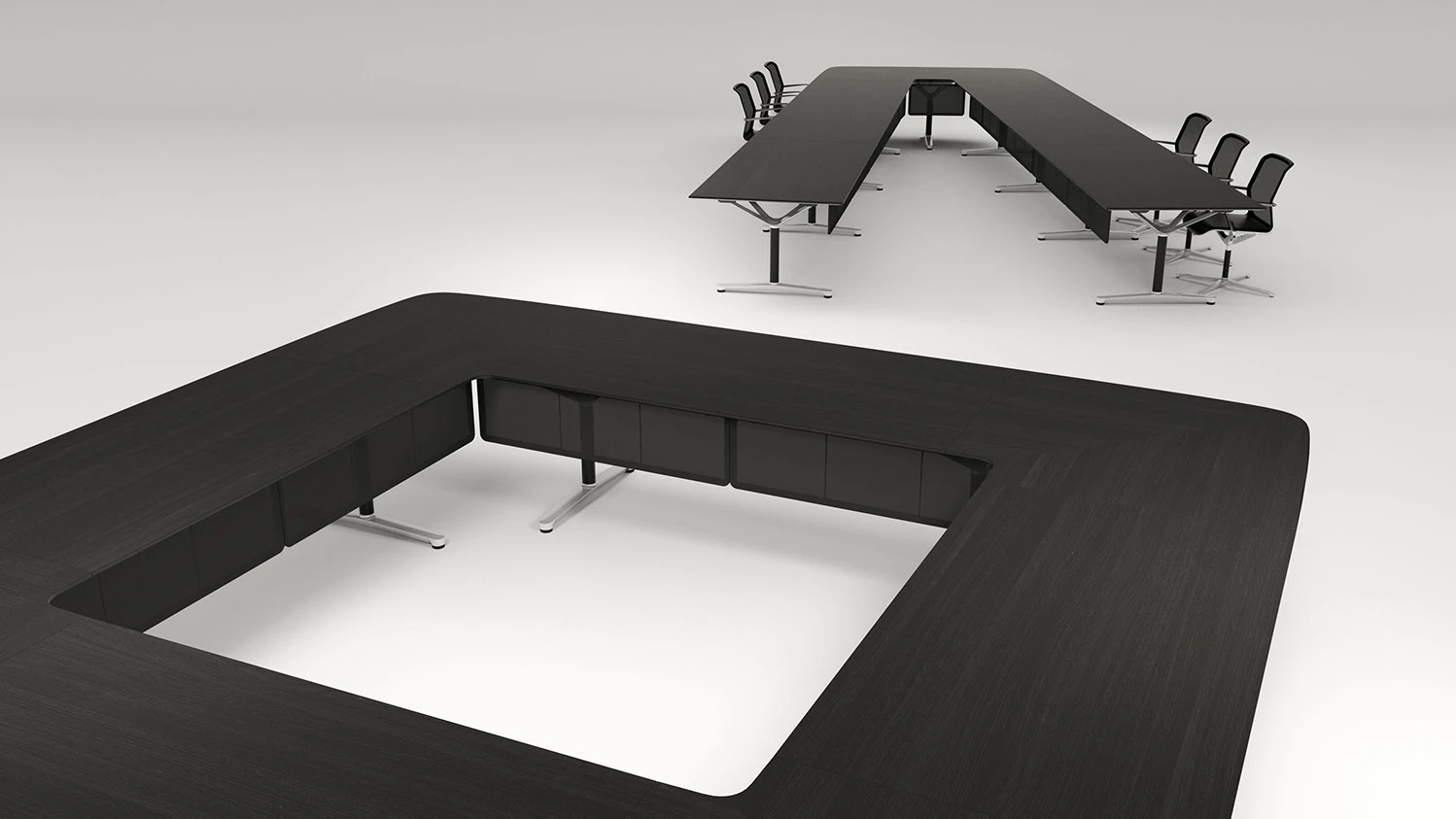
Traditional conference and meeting rooms provide the perfect stage for the protagonists. They are the modern arenas for subtle power games and the big showdown. Besides reaching decisions, this is where viewpoints are presented, supported, questioned or challenged.


Informal communication – Rehearsing for the big performance


If it is all just a big show, who writes the script and where does the rehearsal take place? The exchange of information in passing, in the elevator, in the company kitchen or during after-hours unfolds according to completely different rules. Here, pecking order plays only a secondary role, while personal relationships, preferences and interests spur the formation of groups across various departments and hierarchies.

What is even more surprising is that informal structures in a company are more important than the formal ones, even if they are not always visible. Personal relationships among employees impact work processes much more than one would expect. A well-functioning company cannot do without one or the other.


Creating value through networking


We are in the midst of a structural change, transitioning from an industrial age to a knowledge society. Knowledge has become the most important factor that influences productivity. However, information alone does not have an explicit value; it needs to be integrated to produce knowledge. Value is created by combining information in order to generate added value.

Experience shows that knowledge – and this is a new theory – must always be seen in relation with the information carrier. The human being is seen as the processing entity within his/her social network. His/her knowledge, or his/her potential of processed information, is the result of communication and experience.

Thus, humans rely on two playing fields in order to interact and transform information input into knowledge: on the one hand, digital forms of communication that provide unrestricted access to information and on the other, actual meeting places for interactive communication and social interlacing of knowledge.

Guest appearances are encouraged


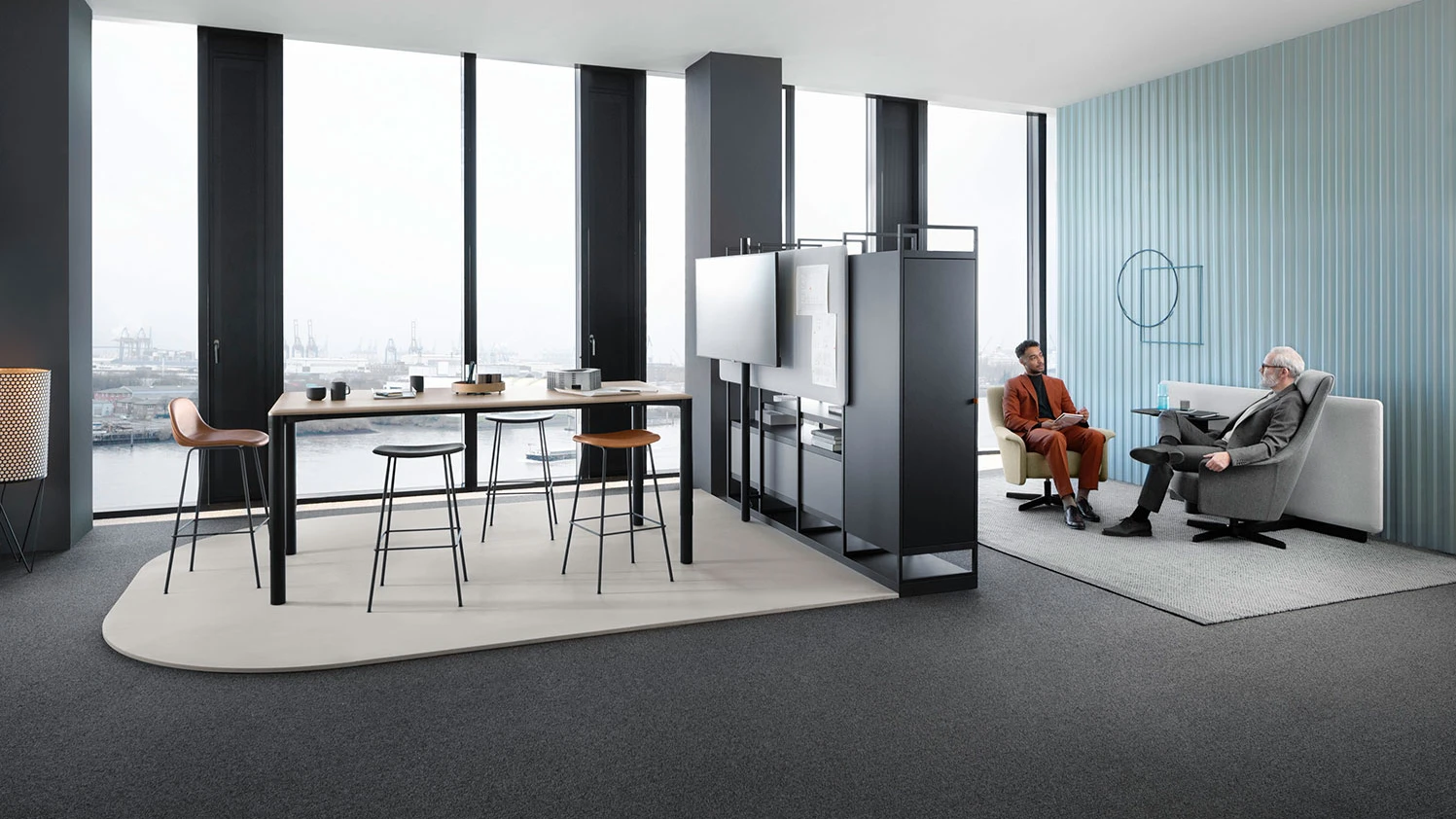
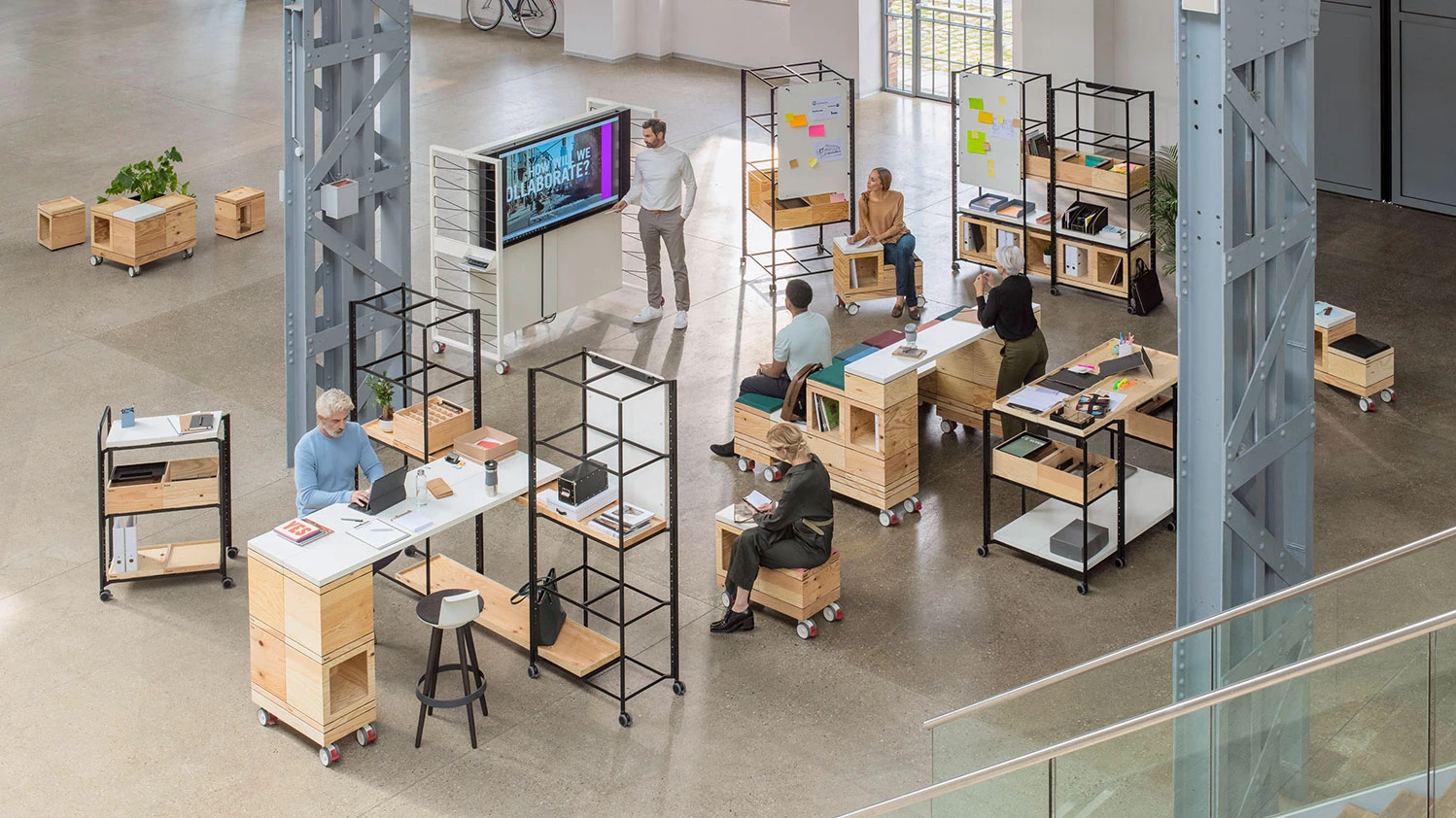
Thus, informal communication areas in the office are becoming increasingly more important. They can encourage exchange between employees, psychologically counteract the increasing trend to compact workplaces, convey appreciation to the staff – and they can create identity within the company.

When these areas are placed strategically with the aim to promote interaction, then the company has succeeded in creating the perfect setting for "analogue" networks, while using the opportunity to stage a complex performance where spectators become protagonists alike - at least in special guest appearances.


Brigitte Schedl-Richter / Nicole Schemerl-Streben