New Working Environments: Coming soon!
What's next? Just where are we heading with our fast-paced world of work? What will come after the non-territorial office, the open space office and home office? Just where will future job-hoppers and knowledge workers take residence? What will companies have to come up with to dominate in the war for talent?The answers to these questions remain unclear. The word on the street is to put your ear to the wind and identify discernible trends. This is what we will be attempting in our new series of the Bene Office.Info Trendletters over the coming months. We will try to discern leading trends and key words that characterise the developing work environments of the future. These do not have to foresee the next 20, 30, or 40 years. Specific forecasts for the next five years would be an achievement in itself and will help us plot our future course.
Smart, smarter, ....
Nicole has her e-mails under control. Her Outlook calendar as well – and all upcoming events - including the next presentation. There are still a few things that she needs to research and compile. She will then decide whether to prepare hand-outs for the participants or merely make all the information accessible in the cloud. She will reserve the think tank tomorrow for two hours so that things can be finished up more quickly.
In Germany alone, about 17 million people work in offices. This number will probably not decrease in years to come, but the situation will change for everybody. Just like it always does! We have already experienced a number of changes. One thing is for sure, however: The only thing that remains constant is change itself. But almost certainly with faster turnaround times.
From long ago, we vaguely recall the sterile office environments divided into individual cells which did not gain individuality despite expensive architecture. It took a long time to learn. Well into the 80`s and 90s, office designers still liked to retain the layout of traditional poultry farms.
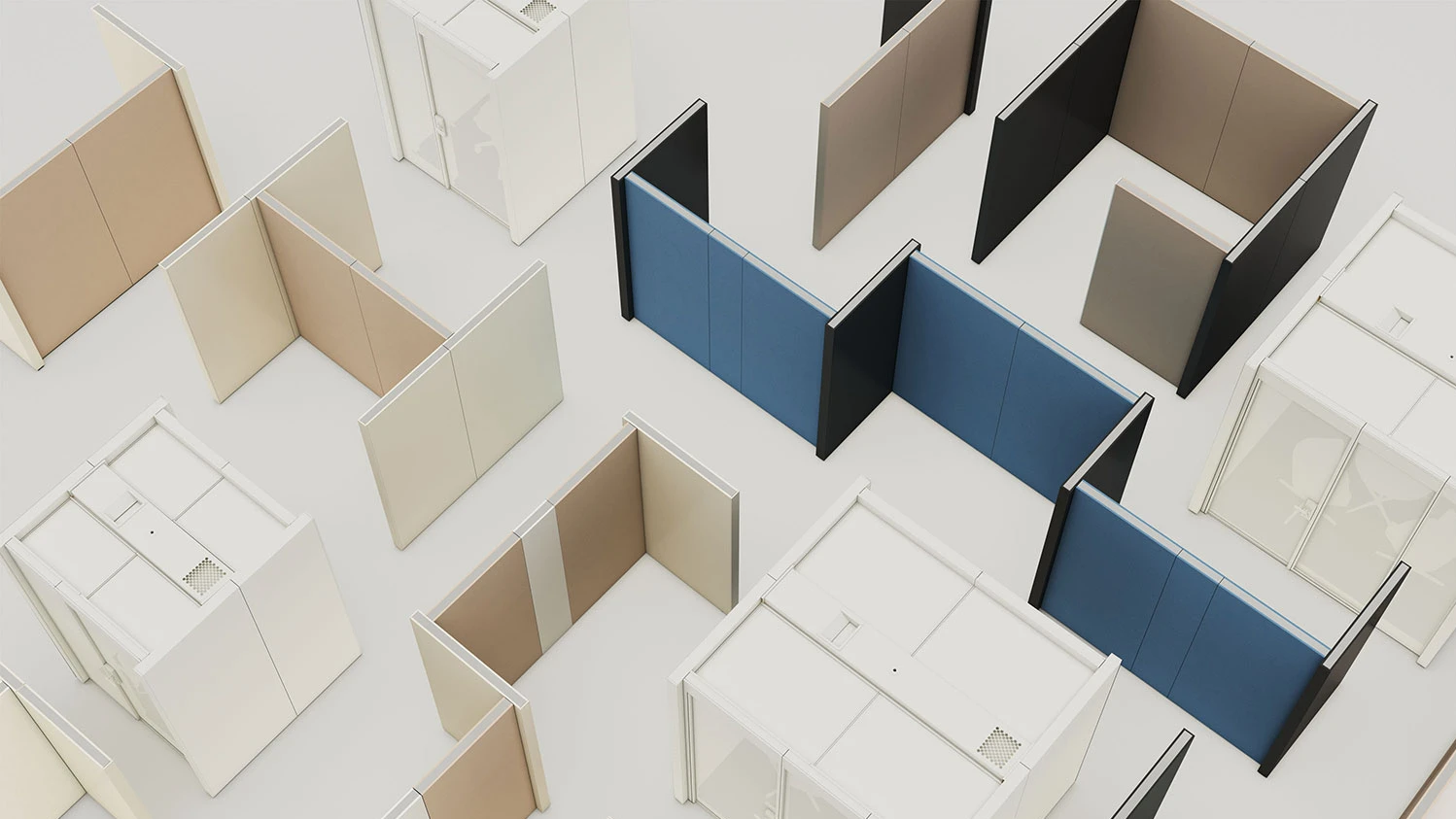
The more innovative individuals took the next step in CAD: Rooms needed to be like a shoe that fits the individual like no other. Flexible walls and flexible divider modules allow large meeting rooms to be reconfigured into small team units (almost) immediately.
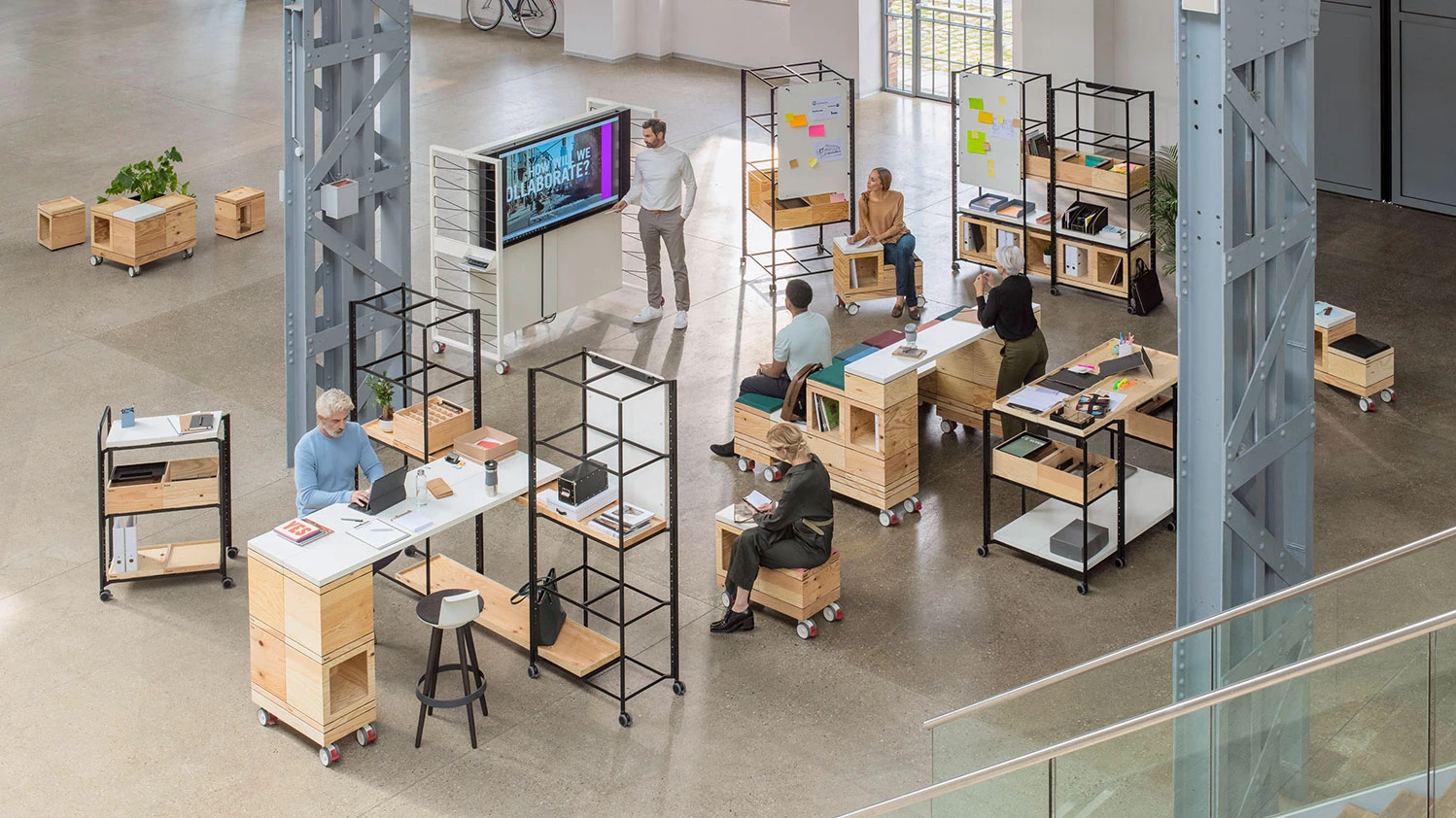
The approach was well received and developed enthusiastic fans relatively quickly. The downside in the mix was furniture which lagged behind in flexibility for changing room sizes and different numbers of employees. The solution to this problem was found relatively quickly. Desks, tables, and small containers were all put on castors so that they could be easily moved into position by being pulled out, unfolded, adjusted in height, mechanically or with gas springs, with more or less noise or elegance for the respective task.
The next step is being taken today. Rooms AND furniture form intelligent settings for specific needs and provide resources for multifaceted zones and areas in which a changing number of individuals temporarily gather. The office is where I am – Whether in the cafeteria, at a touchpoint, in open space or outside of corporate facilities.
Sidestep
One thing can be stated with confidence: Over the last 30 years, the paperless office has not been realised and will not materialise in the foreseeable future. However, another trend will be realised much faster and with less fanfare: Clouds can be found in every corner of the virtual world. A significant indicator that networking is becoming increasingly important and it is not restricted to social networks. Beyond communication, highly developed multifunctional systems are being used that link technical office infrastructures distributed around the world.
Office Reality
When Nicole reviews her scheduled for tomorrow, she sees several changes in location are already planned. The day will start with the regular weekly meeting in the media room, and then she will meet with two colleagues to discuss a project in the lounge.
She will then sit at a shared desk and try to conclude yesterday's open activities over the course of an hour. A meeting with a customer scheduled for 12:15 in the cafeteria should wind up by her lunch break. Who knows who she will bump into at lunch! At 2:30 she will give Telco a ring in the small office box to coordinate things with colleagues in Bratislava. Any number of tasks can present themselves between these fixed appointments. A few surprises are to be expected. Some projects are still in the structuring phase at the beginning of the year, and there is always a need to exchange information and clarify things with colleagues from various departments. It's a good thing that there is always an opportunity for spontaneous discussions in the open central zones throughout the company, where one can also "just" meet up for creative and productive breaks – which are both pleasant and necessary!
Brigitte Schedl-Richter