Knowledge workers: the new heroes of the working class
Knowledge is the key to the economy in the 21st century. Information is constantly being processed afresh and handed on. The people “responsible" for this are the so-called knowledge workers. And don’t imagine for a minute that this means only teachers. You are probably one of them yourself!OK – the group surely includes the representatives of the creative class, developers, scientists, and people who teach. But knowledge workers can equally well be key-account managers, people with marketing responsibility, journalists, trainers, environmental specialists, coordinators or nutrition consultants – there is virtually no area and no position in a company without them. Knowledge is the basis of every economic activity and sharing knowledge is the clear way to create added value.
And this is exactly where things begin to get exciting concerning the topic of the office. Because, despite all they have in common, knowledge workers set about their tasks in so very many different ways, and we want to explore them all...
The way of work
"No, I’m not at my desk today. But we can meet in the cafeteria at 1 pm", Michael is making an appointment with a colleague on his mobile. "I have a meeting after that with Tina and the other people from product development. I’ll be out and about again in the afternoon."
Twenty or thirty years ago mobility on this scale was rare indeed in everyday work. The reason was partly that the means of communication as we know them today did not yet exist, and also because working routine neither permitted nor allowed spatial flexibility. The processes employed in past decades were often linear, work frequently had a routine character and employees were fixed and stationary. The offices where this took place were a perfect match to the work done – linear, inflexible and highly uniform. Of course improvements in the furnishings and the workplaces have been made over the years, but the structure behind them stayed largely the same until today. It is obvious that this kind of rigid office is no longer contemporary in the knowledge age. Knowledge is in the limelight in the world of 21st century work – and creativity and innovation are also in demand. We have already reached a situation where 80 per cent (!) of all people working in the developed countries are doing knowledge based tasks. And this requires an entirely different setting to that of the linear routine job. This is a finding that has scarcely been translated into design concepts until now. But the code of the future will be "space and dialogue" and not "desk and computer". And this because knowledge workers are increasingly making use of the infrastructure in its entirety.
Typology of the knowledge worker
"How do you use your office?": This question was posed by the Helen Hamlyn Centre researchers on behalf of Bene (for more on the topic see our articles on Research for innovative product concepts and Invitation to an ongoing journey, ed.) to a broad range of knowledge workers active in a wide range of areas. They handed out a sheet of paper marked with a grey square representing the office to everyone questioned. What the test people then had to do was plot out the use of their office by sketching in a few lines. The results were not only amusing, but also thoroughly interesting. Because the in-depth analysis revealed that there are four different types of knowledge-workers: the anchor, the connector, the gatherer and the navigator. They differ from each other above all in terms of their mobility and radius of action – and also as a direct result in terms of what places, zones and possibilities provide the ideal environment in their office.
The anchor
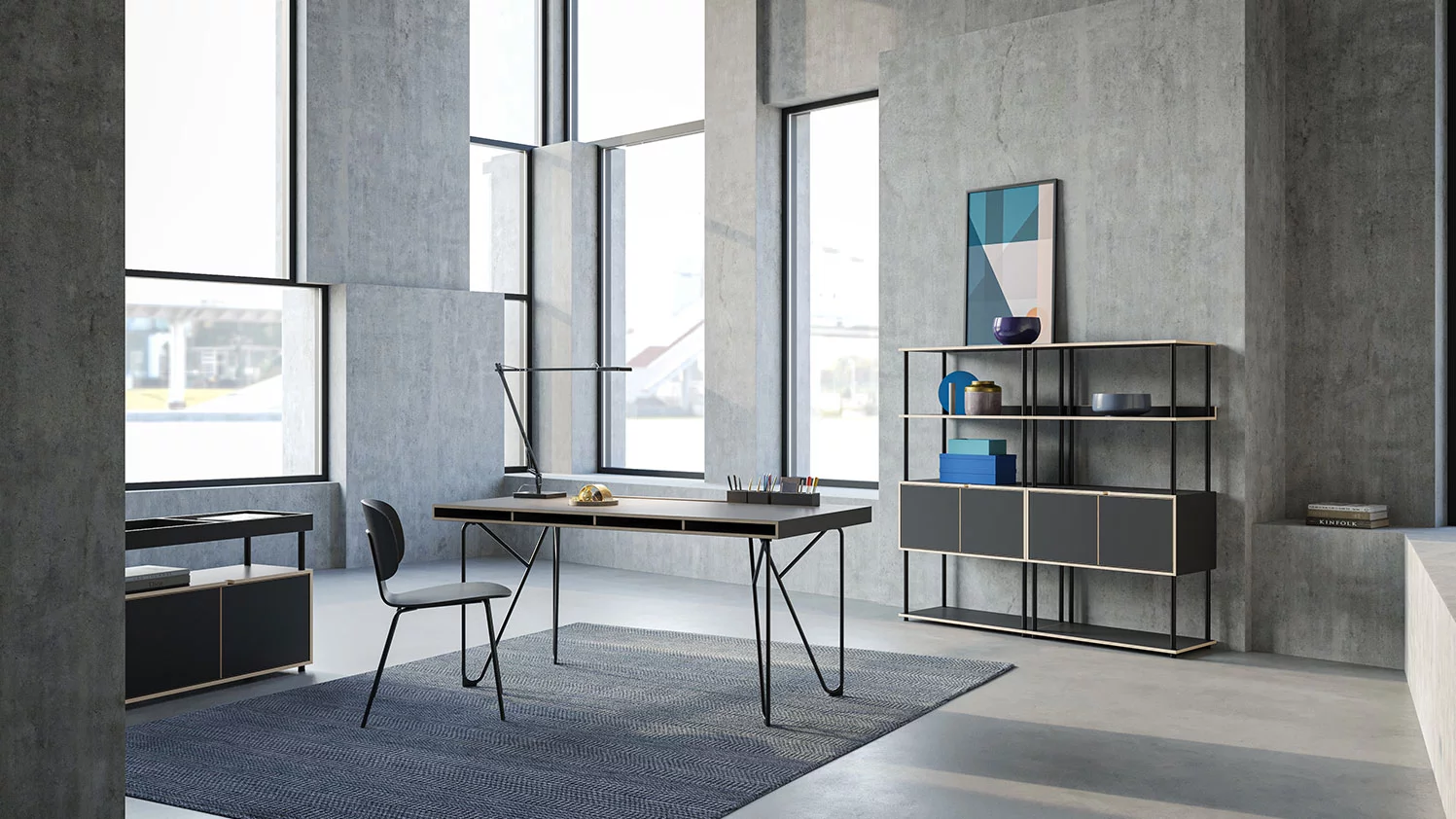
Let’s start with the anchor: the name is the key to the nature of these people, they prefer a fixed place in the office. That is where most of their work gets done. The result is it needs to be cut precisely to meet their needs, since this is where they spend about 90% of their working lives. And one thing they don’t need is noise. Having to listen in to constant phoning throws their concentration completely. Acoustic shielding is essential – either as a fixed component of the workplace, or as a mobile wall. If you are busy in one place for a long time, then comfort generally plays a very prominent role. Not only the acoustics, but also the looks and the ergonomics need to be right. The desk used must also be adjustable to suit every kind of work that is done – for the computer or for brief encounters and talks with customers or colleagues. A comfortable area to wind down and feel good close to the workstation enables relaxation and undisturbed reading.
The connector
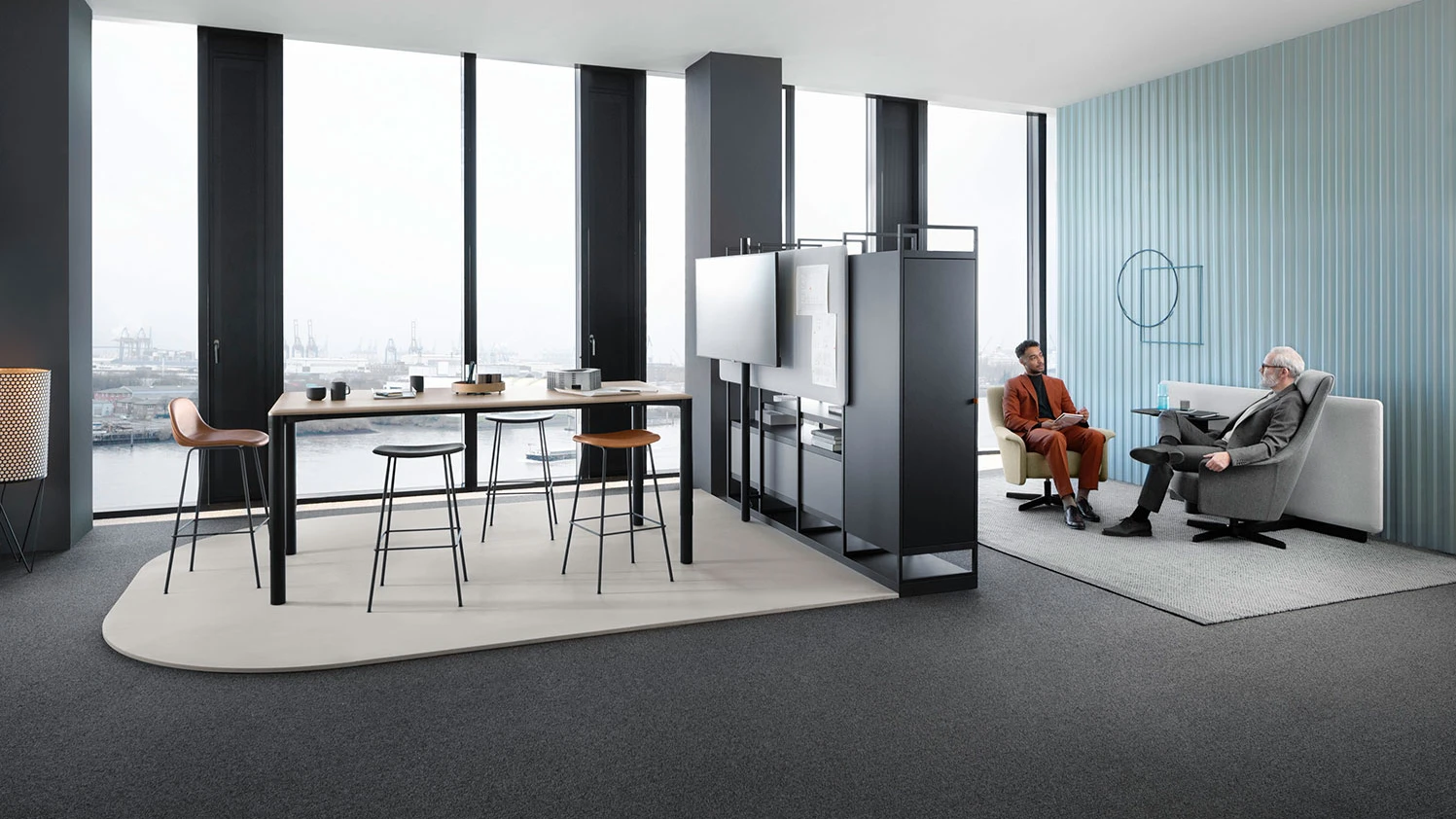
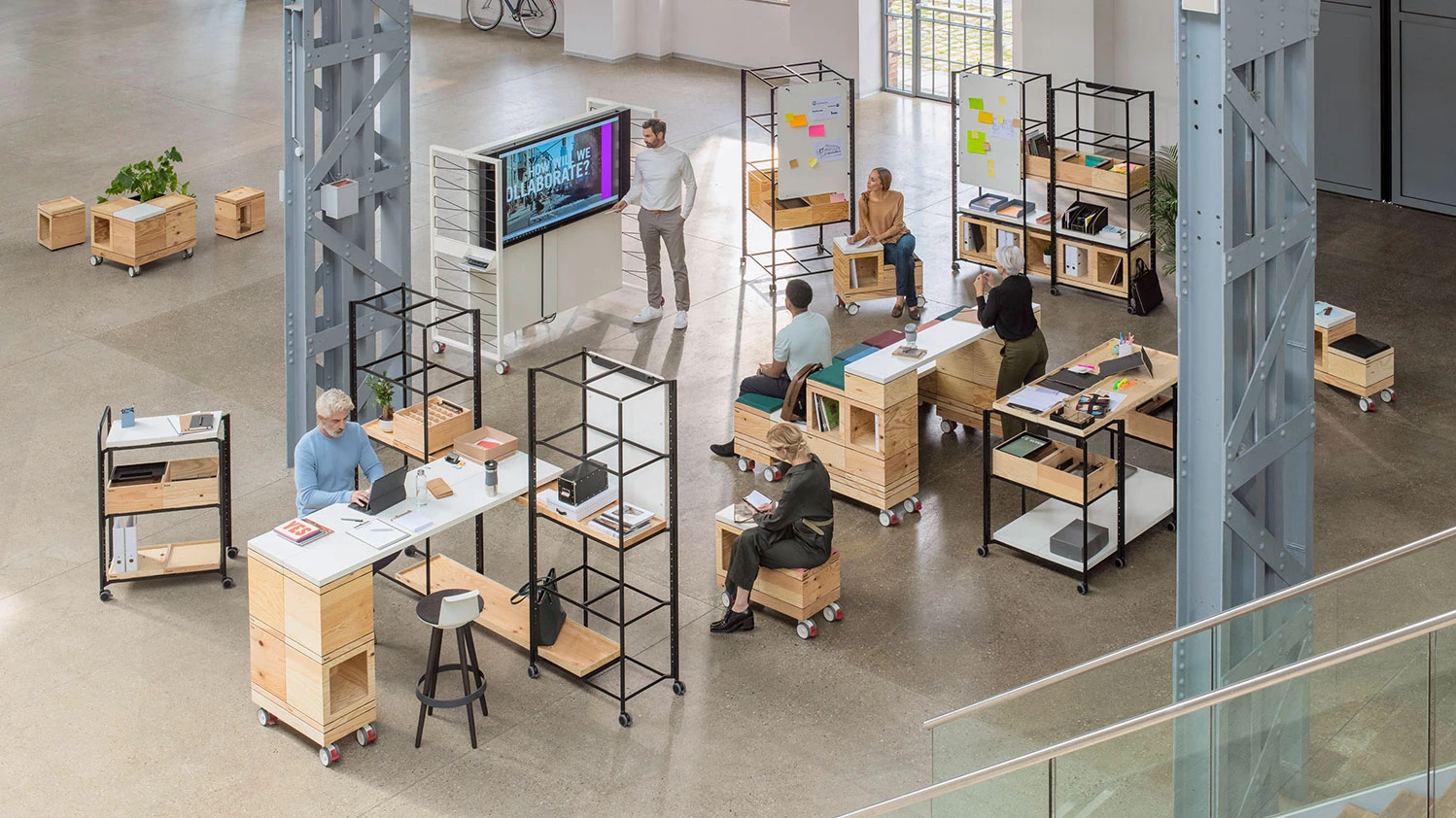
Connectors spend about half of their working time at their desk and the other half out and about in the office building – moving from their desk to that of a colleague, or on to the meeting room pausing at the cafeteria or perhaps the canteen and then calling on a colleague again before returning to their own desk. Follow their tracks through the office and you see numerous lines connecting workstations and areas together. The connector is the person who sees to it that the information flow works, who goes and gets information and distributes it. The person who observes and mediates. The connector is the spatially flexible in-house wanderer – and when these people are equipped in exactly this style then this supports them in their work. A board here, a mobile partition there, a workshop area where the furniture is uncomplicated, adjustable and adaptable. This is how to get on with creative work.
The gatherer
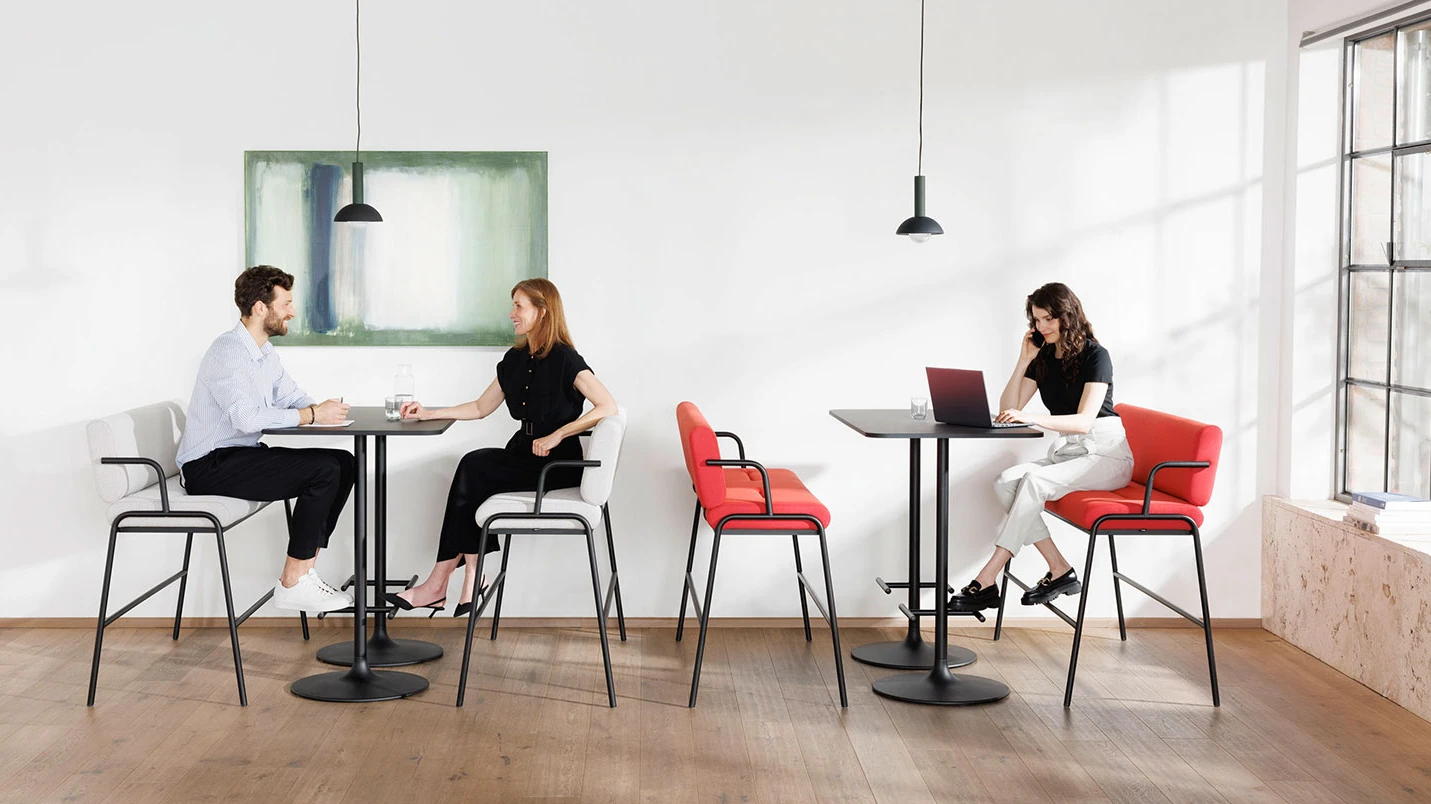
The gatherer is frequently out and about outside the office building. Customer visits and meetings with partners are common. But whenever they are in the office they need a place where they can concentrate. The environment that is needed is created with quiet places and curtains or sliding screens where concentrated work can be done undisturbed. This is where they process whatever they have been doing and have brought with them from their excursions in time and space - their landing strip, their private place. The gatherer also needs places for exchanging information. Hotdesks – tables that can be used by various people on a flexible basis – are important to this type of person. The gatherer is a living hub of knowledge at any time and any place. He freely chooses the locations for his work. These are available for him and can be adjusted to his wishes.
The navigator
And finally: the navigator. This is a person who is almost always on the road, travelling between partner companies, branch offices, leased premises, other parts of town or different cities. Work is done in the hotel, café or at home. Working life consists of frequent business trips and this is the person who is often not seen in the office for weeks at a time. When these people arrive back, however, like the gatherer, they have no intention of being outsiders, but want to sense that they are welcome. A central and friendly arrival and working area proves invaluable for this. This primarily involves all the different forms of communication. When equipped accordingly, the welcome zone makes people feel like they are right in the action, as well as providing a place for withdrawing in an undisturbed meeting with colleagues. During the 10 percent of working time that the navigator can be found in the office, everything turns on exchanges of information and participation in meetings. The life of this person consists very largely of communication and the processing of information and knowledge. If flexible use of space was very much the issue for the gatherer, then it is very much more so for the navigator. Freedom of choice is important and an inspiration to this person.
Michael has recognised himself very clearly in this description. How about you? What kind of working type are you? What zones are ideal for you? Find out for yourself! Bene offers solutions for all the needs in the office world of today and tomorrow. It is not for nothing that Bene says: We design spaces.
Anna Voltren