ORGATEC 2012 – “Smart Working” has arrived
“Modern Office & Object” was the organising motto behind the internationally leading office furniture and design trade fair, Orgatec, which took place this year between October 23 and 27 in Cologne. More than 600 represented firms provided some 50,000 visitors with a glimpse of new trends in the modern working environment. Innovative solutions addressing the themes of communication and interaction were clearly central, along with new and highly interesting suggestions for spaces that foster concentrated, individual work.New working environments in theory and practice
The working world is changing: We are more thoroughly networked and communicate faster, more socially and with more transparency. We have become more mobile and are no longer necessarily attached to one specific workspace. On top of that, the demands we place on our workspace differ according to the type of worker we are: "Solution workers" spend only a limited amount of time at their own desks. They are constantly on the move, meeting customers and communicating digitally; the office is primarily a place for them to drop anchor, for meetings or intensive, concentrated work. Ideal office environments must therefore use their floor space efficiently, providing not only zones for communication and collaboration, but also areas that allow for concentration. The premise behind the "Smart Working" concept is that employees can freely choose their workspace according to their specific tasks or personal preference. The working environment is thus not only a space for dialogue and learning, but also for recreation and rest.
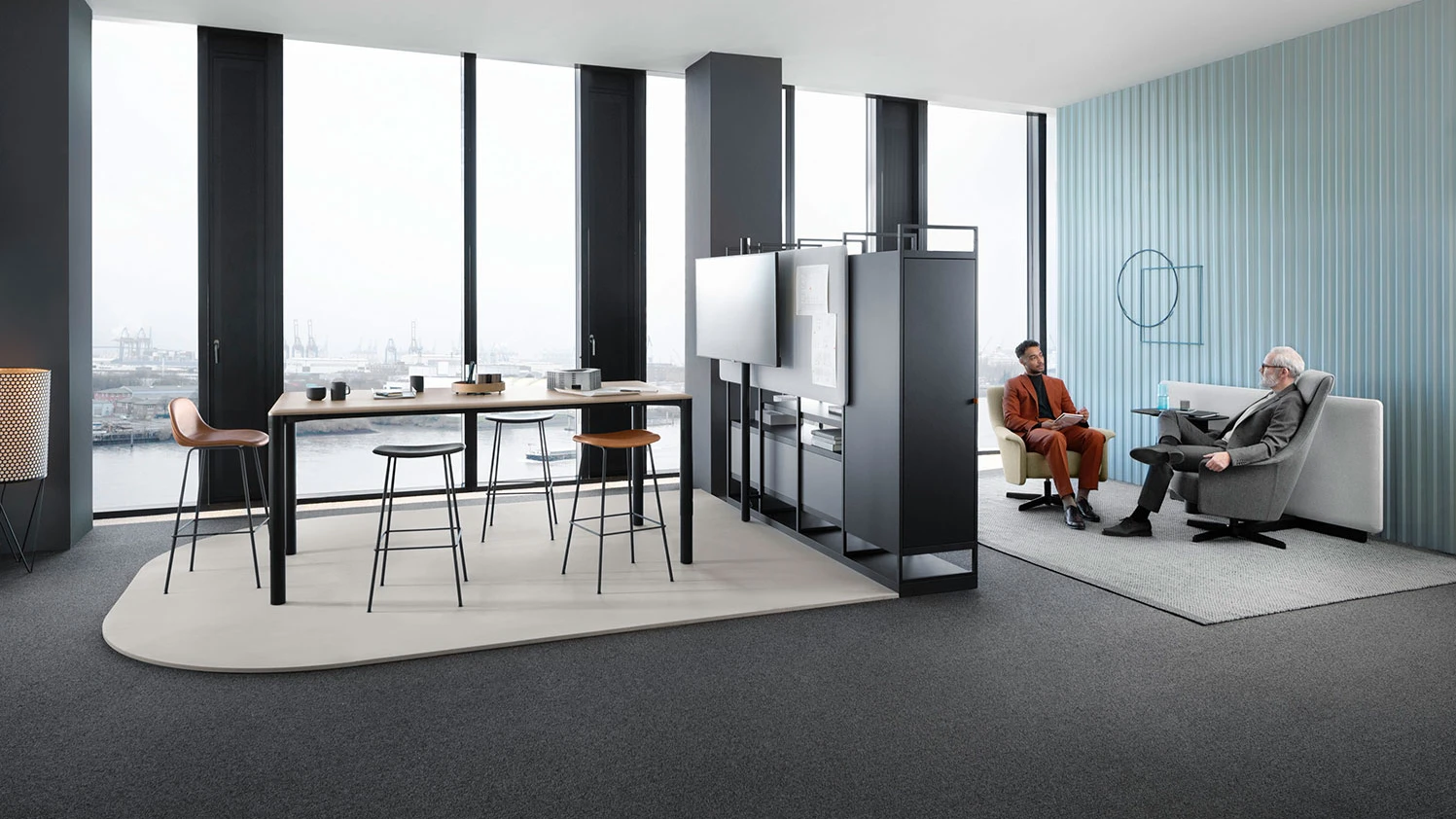
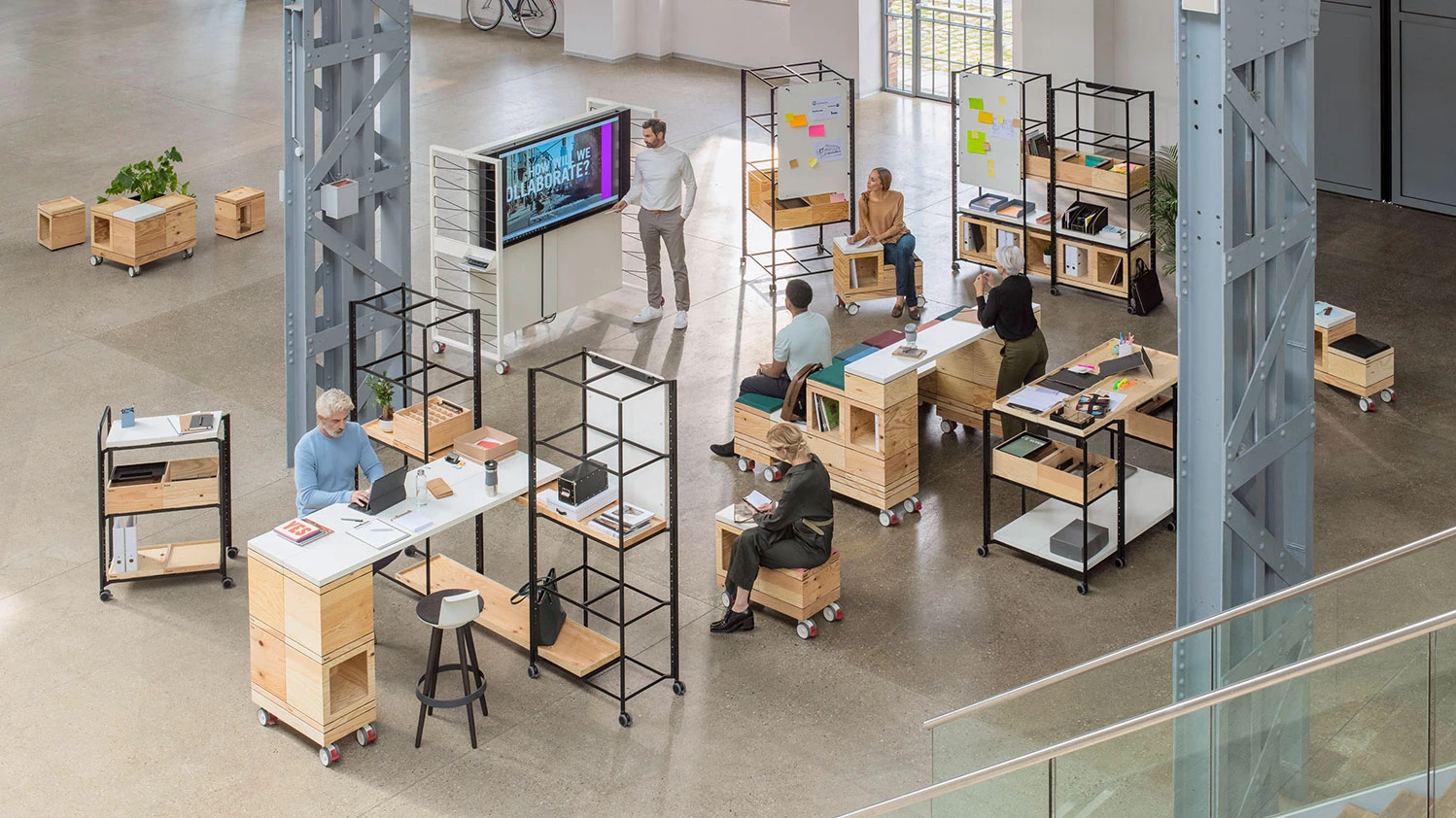
Orgatec 2012 demonstrated in Cologne just how these "New Ways of Working" look in practice, focusing on furnishings, lighting, acoustics and media technology. Ideas for communication and collaboration zones were an omnipresent trend throughout the trade fair’s exhibits. There were hardly any exhibitors who did not present their own version of a comfortable space for informal, quick meetings or brainstorming sessions. The solutions that were displayed showed that the boundaries between industrial design and design for the home are becoming increasingly blurred. The office is staged as a sort of cityscape, an urban living space in which cosy sofas and lounge chairs of diverse colours and materials are very much welcomed. "Communicative" furniture features in the portfolios from Vitra and Bene as well as in lines from Sedus, König+Neurath and Nurus. Haworth has greatly expanded its offerings, providing a flexible and versatile solution for the modern work environment, including work beyond the desk, in its LTB Series, created by the designers Le Téo & Blet.
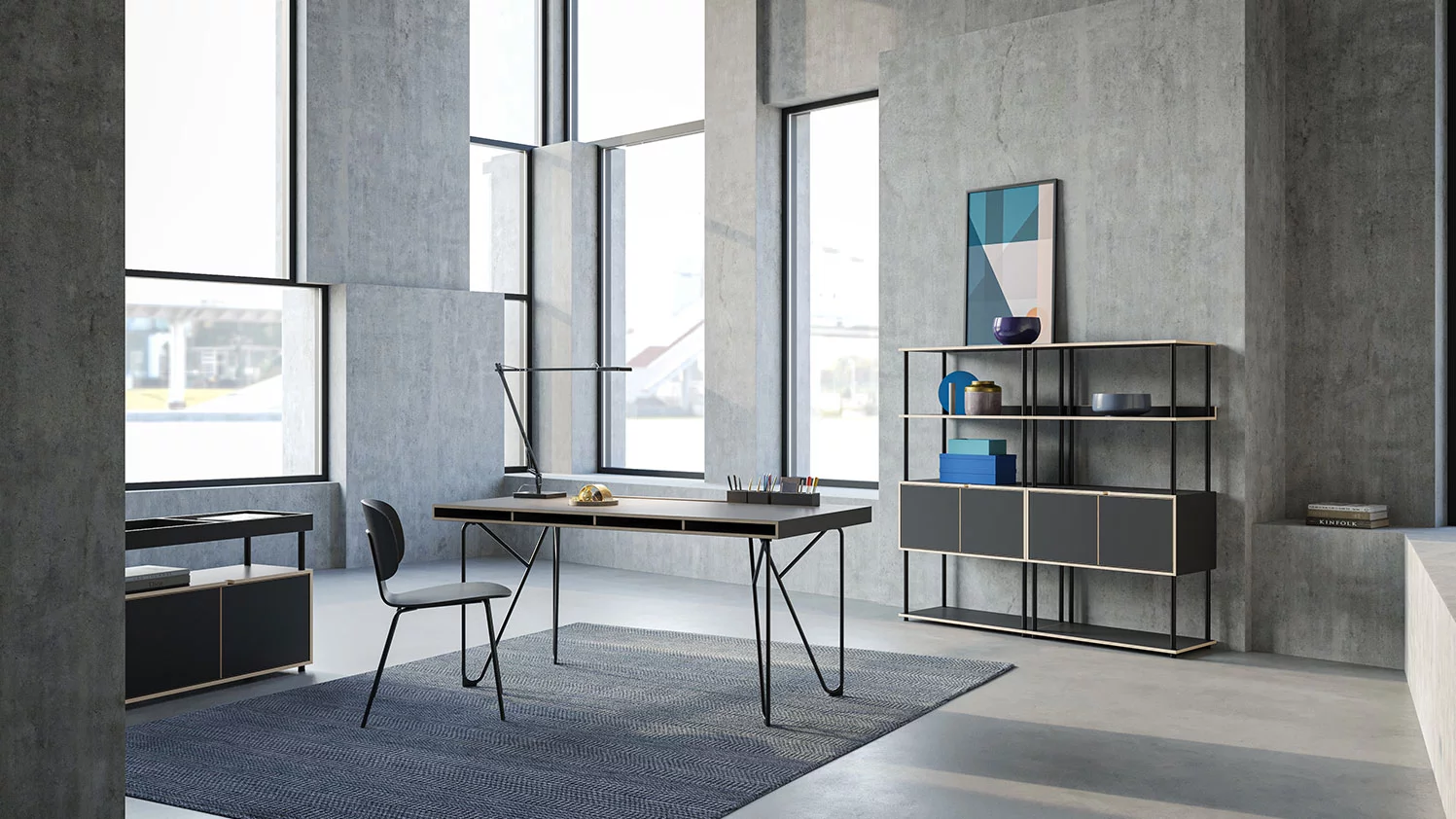
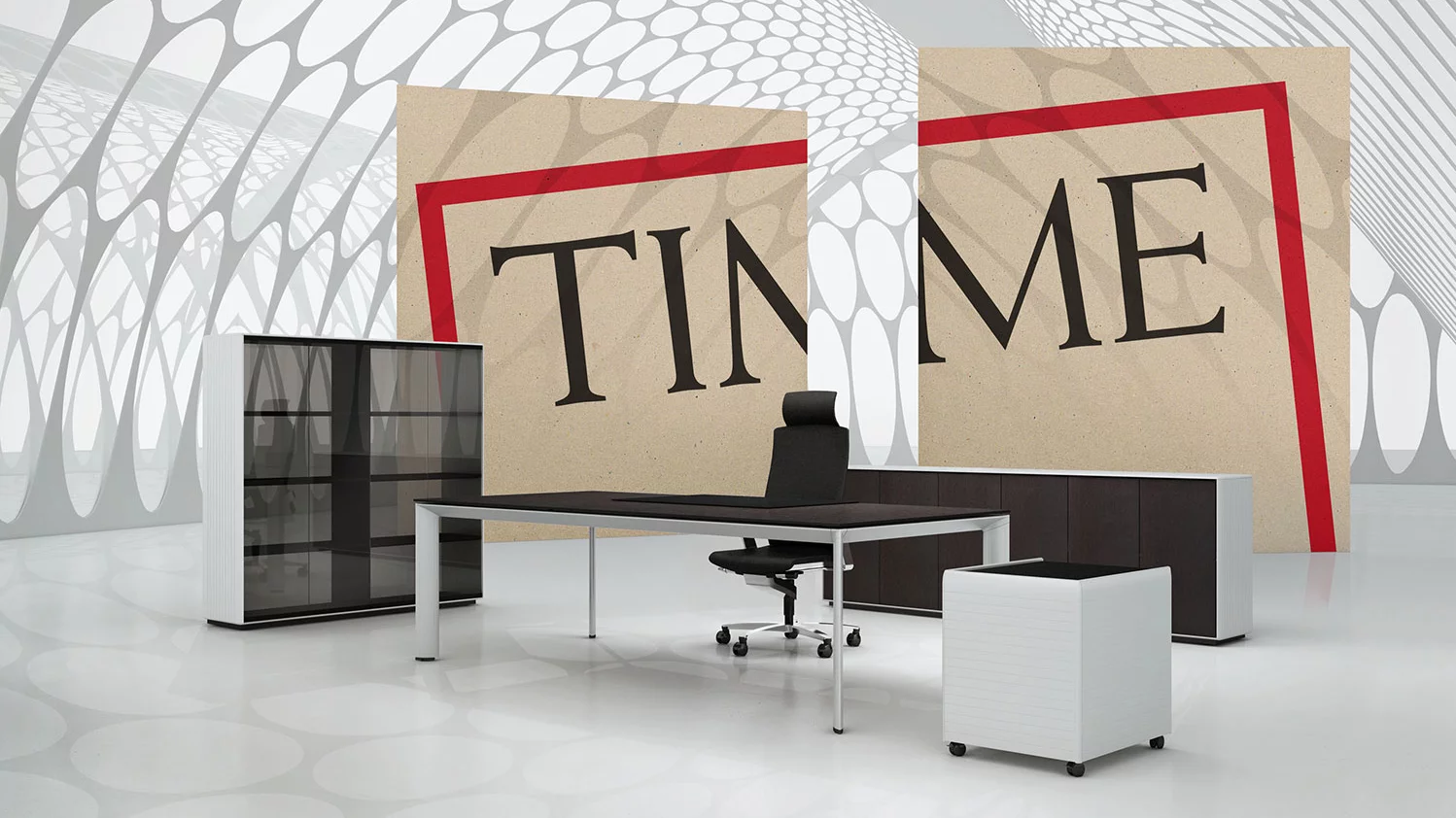
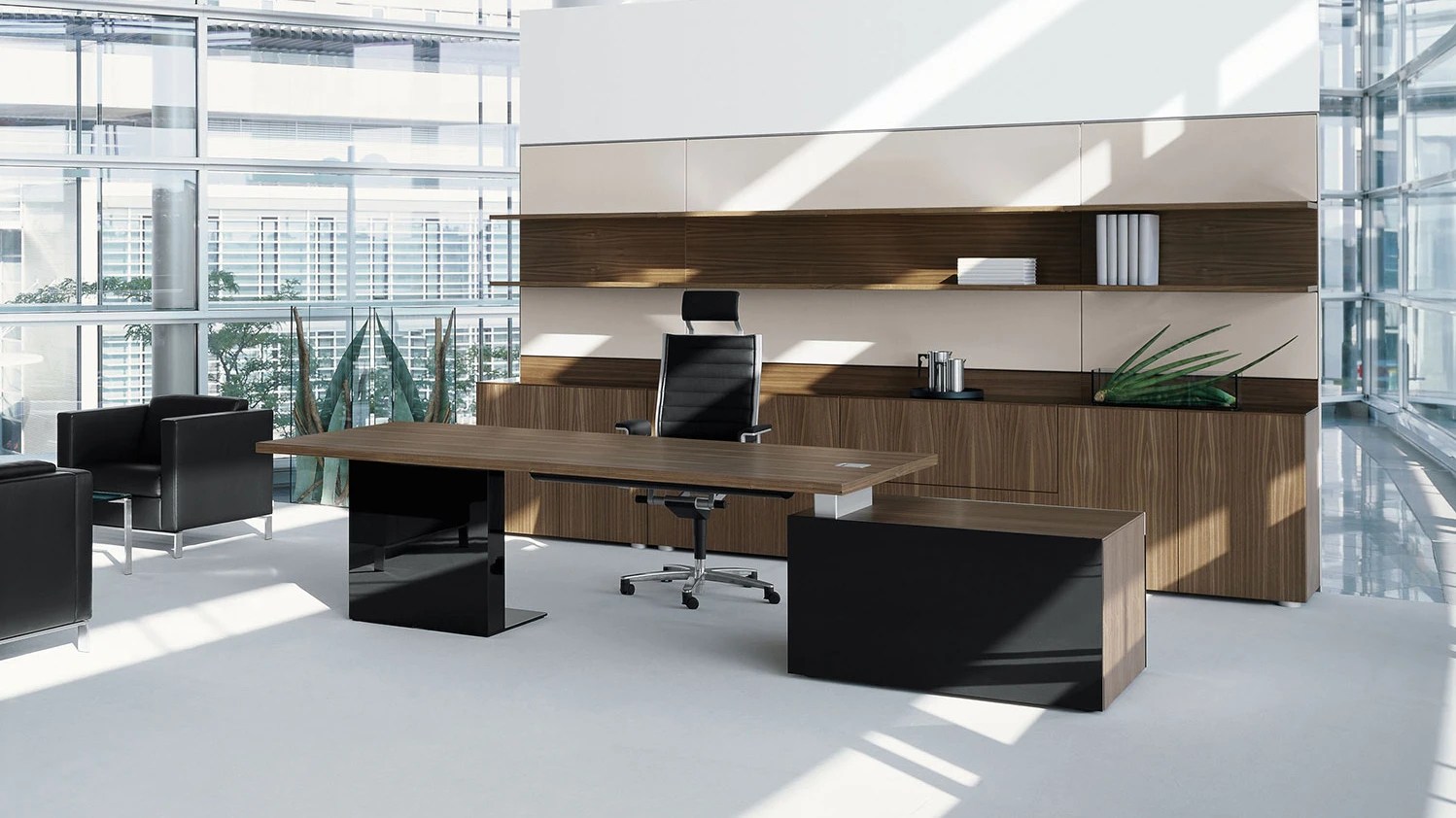
The classic workplace is still very important. Space-efficient, versatile furniture systems are called for, providing the user with plenty of comfort. Bene presented the new product series CUBE_S: stationary workstations that enable you to work as if you were in a cockpit. The storage space and desk are combined in space-saving and varied layouts, reflecting the diverse requirements and activities of the solution workers.
A sense of "stillness and style" in the open-plan office
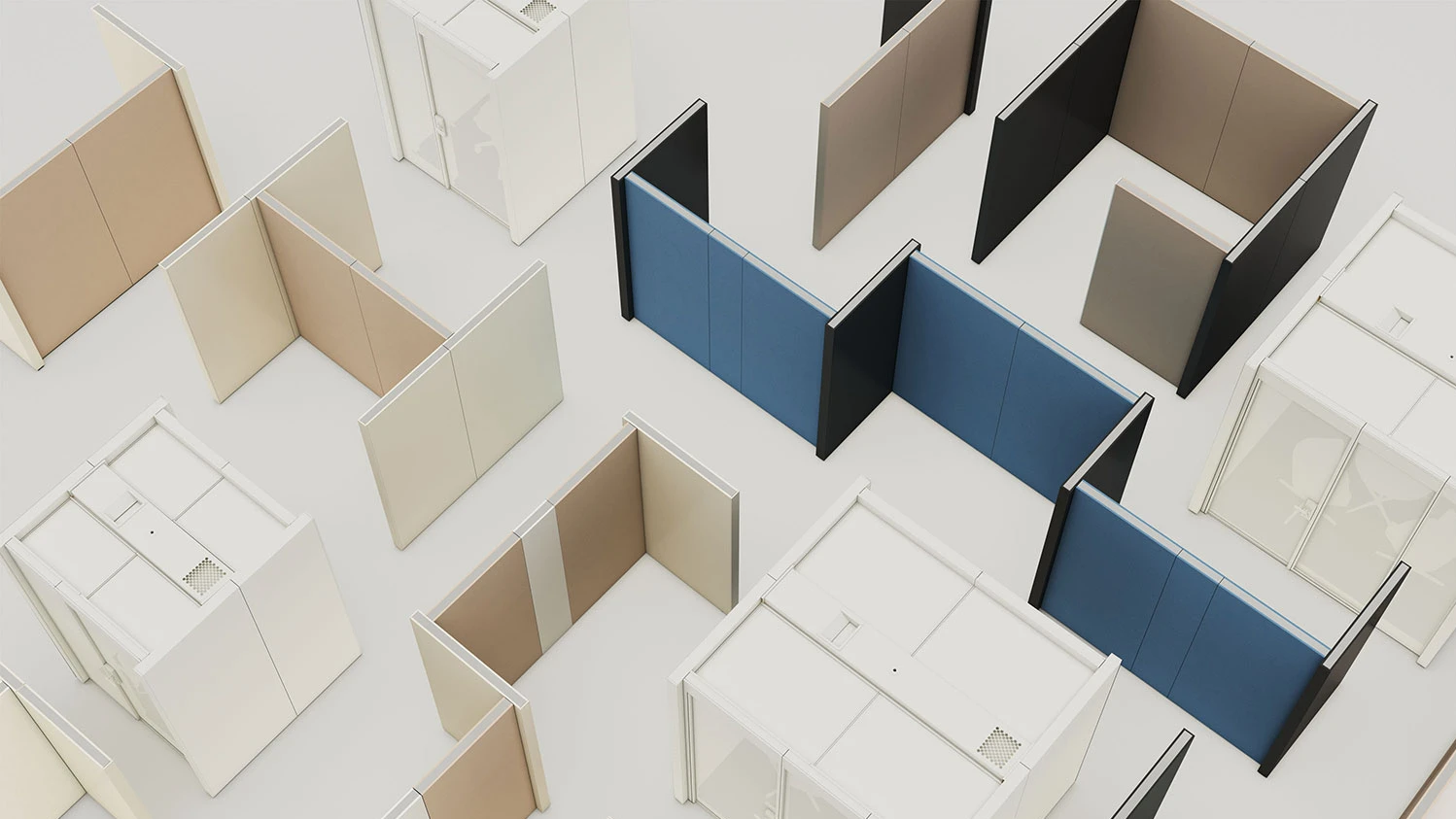
Collaboration and dialogue are all well and good, but the modern office needs areas where workers can retreat into more concentrated work, separate from the lively communication in open-plan spaces. Several exhibitors have identified this need and offered possible solutions to the challenge of providing space for concentrated, individual work. Workspaces are furnished with walls that shield the user acoustically as well as visually and which create protected coves where one may retreat temporarily. Bene and Vitra have especially set the tone in this respect.
With its DOCKLANDS line, Bene offers a family of products consisting of a variety of combinable modules. Developed by the London design studio PearsonLloyd, DOCKLANDS features so-called "Dock-In Bays", individual workspaces that are sheltered without being completely closed off, a practical coat rack, a service dock for technical equipment, and a "Phone Booth". Soft textile walls made of felt counterbalance the acoustics of the open-plan space and spin a compact cocoon for focused work.
Vitra offers an alternative workspace with its "Workbays", a solution that is equally flexible in its setup. With a design based on Ronan & Erwan Bouroullec’s "Alcove-High-Back", the Workbays are ideally suited for uninterrupted individual work, but can equally serve as a small meeting or reading space. The units have polyester matting and come in a variety of formats and heights, optionally with or without an accompanying desk.
BuzziSpace, a Belgian firm, also meets the demand for a sense of "stillness and style" in an open-plan office space, presenting a diverse product line. The BuzziHub series offers a variety of combinations and possibilities to interact informally without being disturbed by others. The BuzziBooth, which is also outfitted with sheltering felt-covered walls, can be used as a telephone booth and for a number of other purposes. The BuzziCockpit is packaged as a sort of covering that can temporarily transform any workspace into a place of peace and quiet.
So full of colour here
It was impossible to ignore the new sense of courage in the approach to colour: flashes of green here, bright yellow over there, blue, purple, pink. There were practically no limits to the imagination - the spectrum ran from subdued, gentle tones to saturated, strong colours. The classic white obviously remains as current as always, but warm grey and green tones are also making an appearance, as are cyan and yellow as accent colours. Textile elements display a dense and strong structure, but have a warm and homey sense to them. Whether used alone or combined, these lively colours bring vitality to the office and can, when used as acoustic panels, help minimise unwanted sound.
Producers are beginning to offer a few cautious patterns that accentuate soft textile qualities as well as solid materials. "Greenwich", a fabric developed exclusively for Bene by PearsonLloyd in cooperation with Kvadrat, provides finely drawn, colourful accents in DOCKLANDS and PARCS by virtue of its subtle patterning. Inspired by the network of paths in London’s Greenwich Park, it lends the furniture character and a sense of originality, and loosens up even large areas in a subtle manner.
Sitting in motion
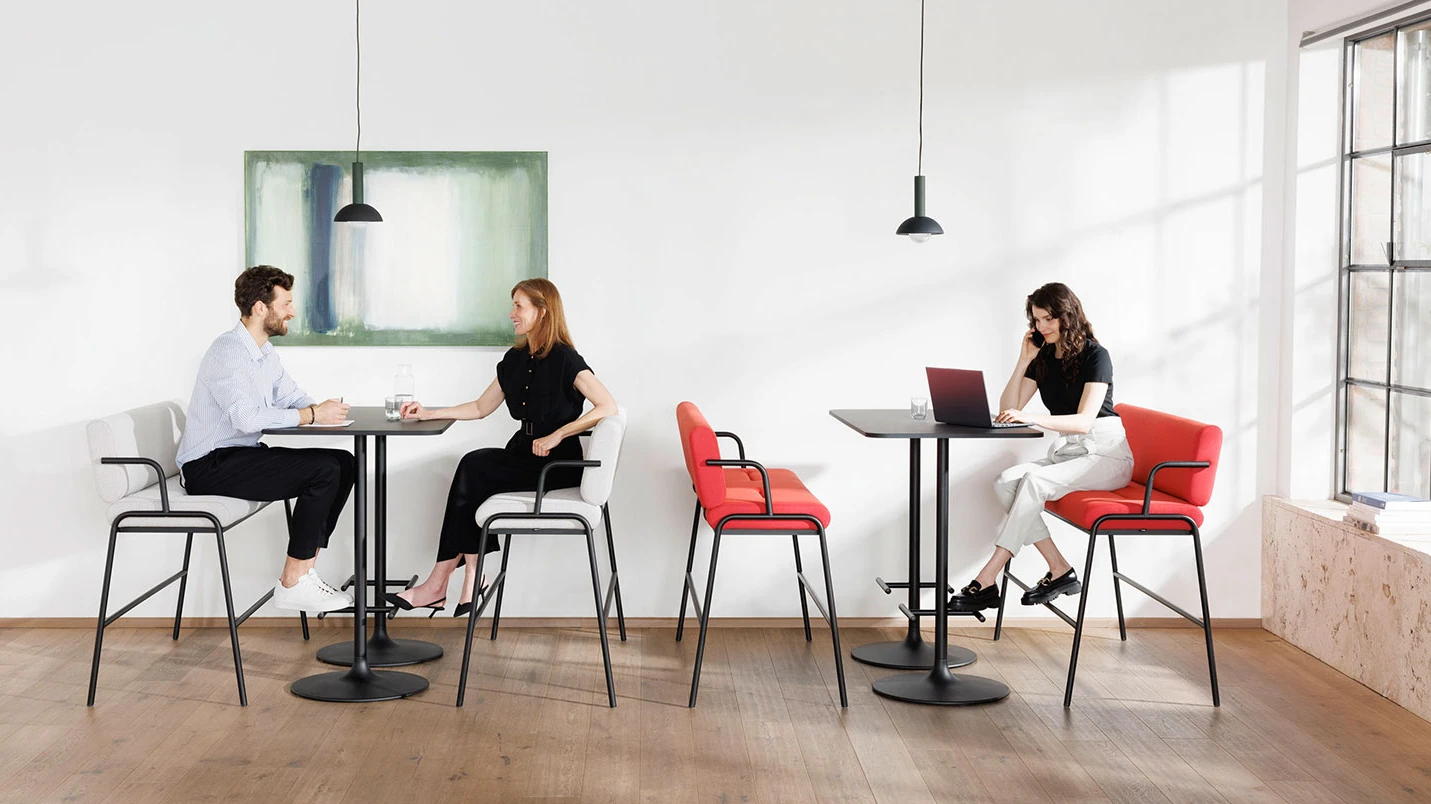
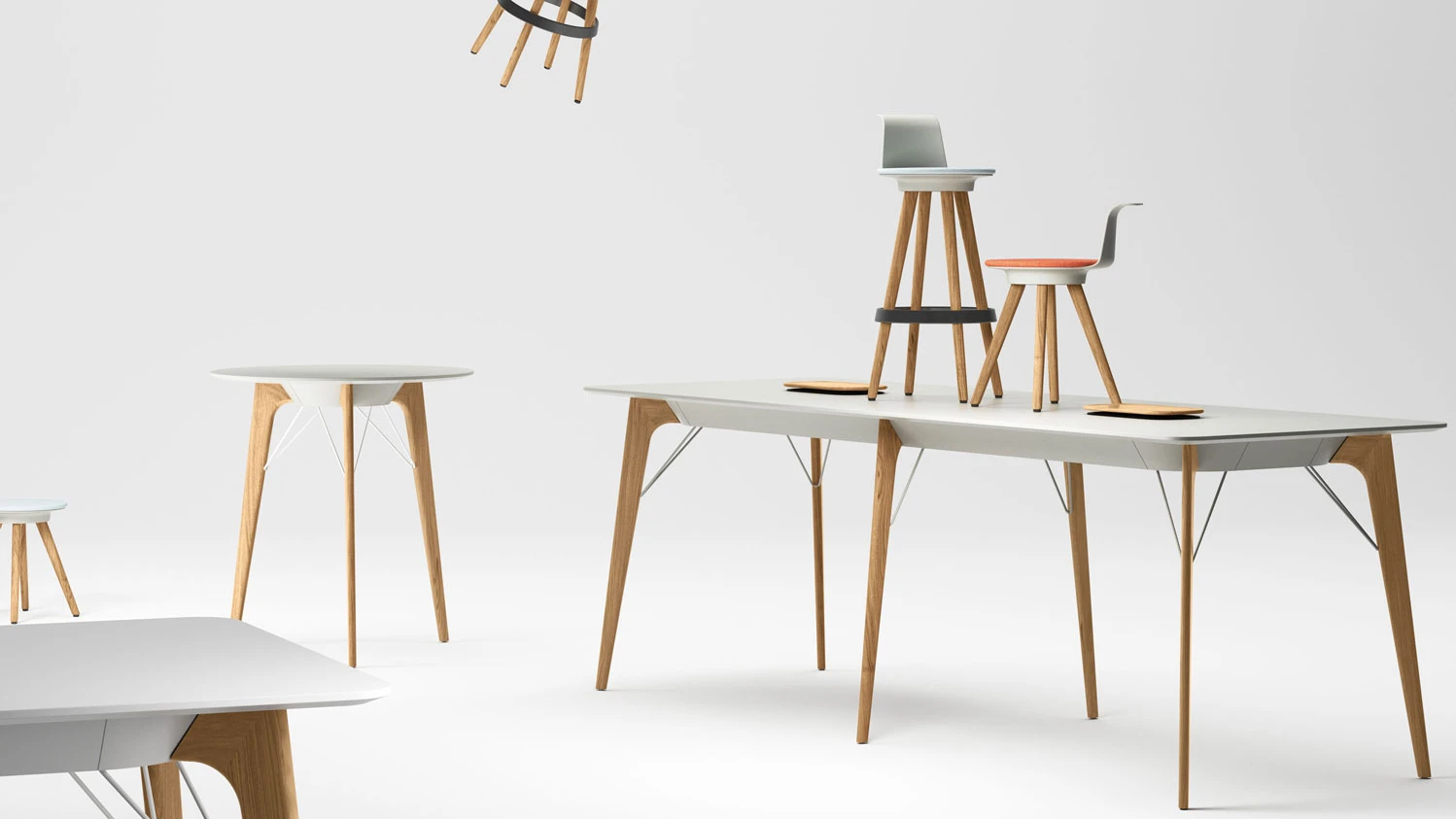
There are also plenty of new features in the area of seating. New chair typologies not only invite the user to linger, but also to rotate, rock back and forth, or stretch. Many of the new models on offer are extremely conducive to movement. This promotes concentration and guards against fatigue, while benefiting the user’s health. One new, surprising trend is the appearance of stools, which were featured in many exhibitors’ displays in a variety of colours and forms. These provide yet another indication of just how closely office and living spaces are beginning to resemble one another.
Motion can be detected in design for management, too. Walter Knoll presents a worthy alternative to Charles and Ray Eames’ aluminium chair with the "Leadchair", designed by EOOS. Elegant understatement and timeless modernity are as equally evident in the design of the "Leadchair" as functionality and comfort. With its "Graph" (design by Markus Jehs + Jürgen Laub), Wilkhahn offers a conference room chair that wins over with its spry but clear lines and finds the perfect balance between aesthetic appeal and compelling engineering.
This year’s Orgatec demonstrated that "Smart Working" is no longer simply a theoretical concept, but has already become a reality in design and production. The majority of producers have responded in a variety of interesting ways to the demands of the new working environment. Generally, we can say that the office will continue to be a reference point and a place to drop anchor, despite the fact that the ways we work together are being re-designed.
Angelika Molk, Nicole Schemerl-Streben
Fotos and Smartworking videos @ Orgatec 2012