Bene Office Furniture
Subscribe newsletter
17. Sep. 2008

The Sound of Architecture

Sounds and noises are an element of architectural design that receives little attention. The creative management of space and sound is in much greater demand than simple noise prevention.

The creaking and groaning of an apartment’s parquet floor in an old building, the ancient echo in a palatial marble entrance hall, the soft cosiness of thick carpets, fabric wall coverings and heavy curtains that line a room, or even the energetic mix of sounds like the tapping on a keyboard, ringing of a telephone and voices in an open-plan office or call centre. Every room, every building and every district – irrespective of size, surfaces, structures and materials - has its own individual acoustic atmosphere that through its subtlety is often underestimated in terms of its importance on our well being.

"When architects talk about acoustics, this inevitably involves soundproof windows, footfall noise insulation and perforated resonators made from plasterboard. What a room sounds like, what noises are triggered by the people who use it and what kind of sound atmosphere a room has are all often left to chance", write architects Doris Kleilein and Anne Kockelkorn in the book "Tuned City. Between Sound and Space Speculation", and who advocate "acoustic aesthetics" aside from the considerations of soundproof walls and noise insulation.


Noise Levels in Open-Plan Offices


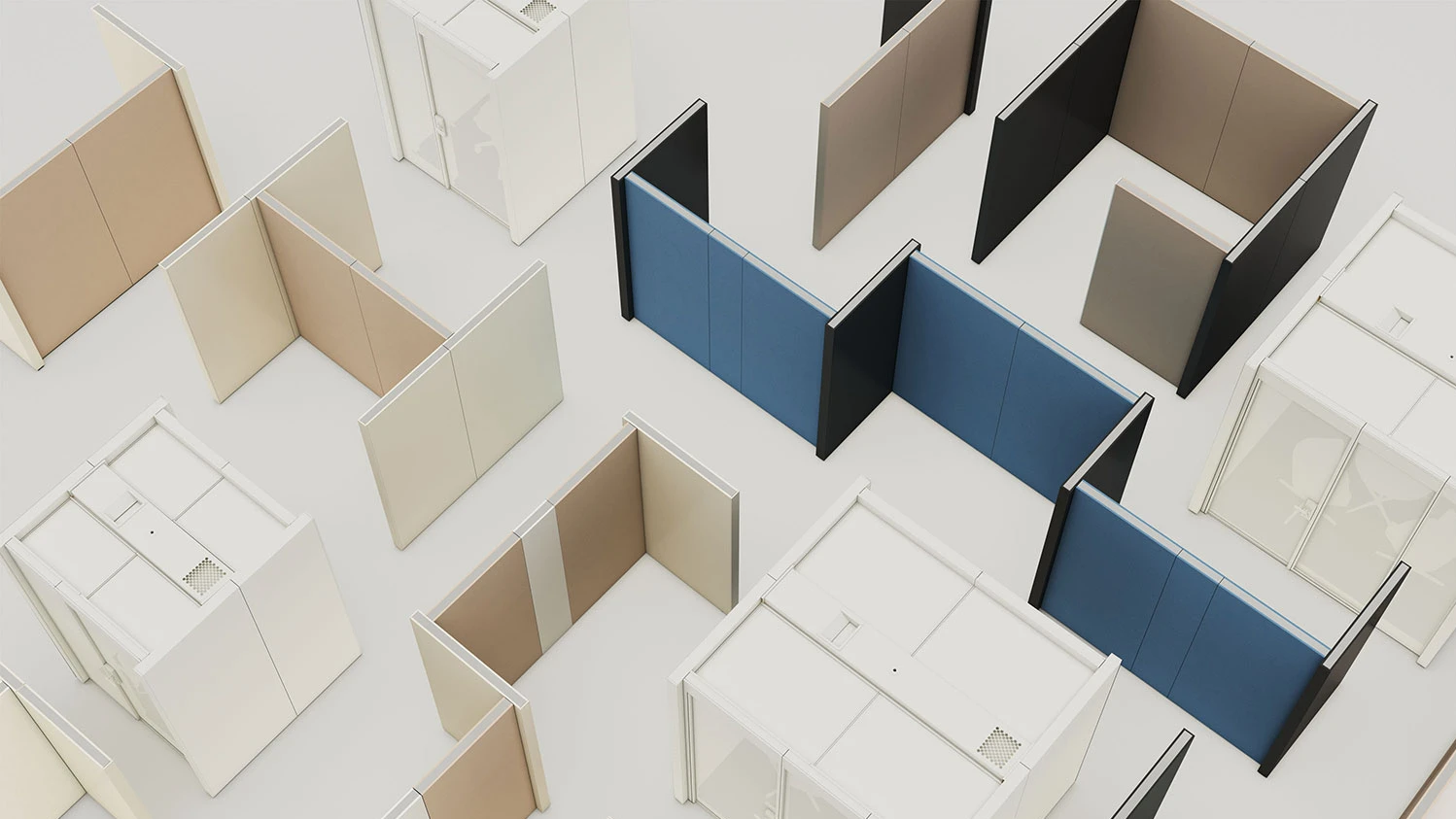
Increasing levels of noise in the modern working world mean that building and room acoustics play a relevant their role in architecture. The trend for open and spaciously designed office environments where each employee’s work space is smaller and the communication between office employees is greater, can disrupt concentration levels considerably and lead to stress - not to mention noise from the street and similar external disturbances. Architect’s offices are specialising more and more in noise evaluation, acoustic design and the development of special products. Through computer simulation it is possible to minimise reverberation time and intelligibility of words from the outset, and sound reflection can be controlled in existing spaces by using absorbers on ceilings, walls and floors. It is even possible to use office furniture to limit the propagation of sound.

Architects, town and country planners, sound engineers, sound artists and scientists have now started to use noise-preventing measures to understand the positive, space-creating, social and communicative design potential of sound, as demonstrated at the international conference "Tuned City", which took place recently in Berlin.


The Sound of a Building


At the conference, architect and city researcher Arno Brandlhuber and sound artist Mark Bain introduced the joint project "BUG. Plug into a building" – a classic example of how to open up the barriers between architecture and acoustics. Bain will extract the innermost movements of an office building in the centre of Berlin - that was designed by Brandlhuber and is due for completion in May 2009 - and transform it into a real acoustic space. Bain has already used a sensor system on the shell of the five-storey, airy concrete building to take seismic data measurements and capture all the mechanical and acoustic vibrations that are caused by wind along the facades, the lift, footsteps, rain falling on the roof, trains running in the underground below and the thermal expansion of materials.

The sounds are fed into the system and are amplified, mixed together and made accessible to passers-by – usually already wired up to their MP3 players – who are then connected to the building through headphones so they can listen. What is more, it will be possible to listen to and control the sound of the house on every storey. "Theoretically you could cause the building to collapse with the vibrations that build up", says Brandlhuber as he points out the immense power of sound.


Sensual Architecture


Despite ruminated statements that it must be possible to experience architecture through all the human senses, it is visual perception that ultimately determines most decisions. The windows of a building are always geared towards letting in light and are less oriented towards acoustic sources that follow completely different physical laws and no know optical barriers such as walls.

The intersection between sound art and architecture is diverse. It has been used for a long time in the room acoustics of concert halls as well as in sound installations where a room’s structural qualities are considered an integral element. In the ancient world, architecture and music - according to the Pythagorean principles of Gold Section principles and ideal proportions – were considered one and the same cosmic harmonics that were also applied during the Renaissance period, as Munich resident and architecture theorist Ulrich Winko explains.


Pioneers of the Symbiosis Between Music and Space


Engineer and composer Iannis Xenakis, who sometimes works at the offices of Le Corbusier, thinks of his architectural designs as frozen music. Together they designed the Philips Pavilion for the 1958 World’s Fair in Brussels, in which sound could be modulated through 400 loud speakers arranged around the space. The covering made from hyperbolic paraboloids was based on the graphical interpretation of Xenakis' composition Metastaseis, a glissando that foregoes any recognisable melodies.


Opera House and Sound Sculpture


Chief Editor of British magazine Earshot, Rahma Khazam, quotes later examples. Toyo Ito’s design for the Taichung Metropolitan Opera House, that is due to be completed in Taiwan in 2009, was inspired by the sound concepts of composer Toru Takemitsu. The link between music and nature in Takemitsu’s creations, is reflected in the opera house’s structure, which creates an almost seamless continuum between inside and out through a network of cavern-like rooms.

An even greater symbiotic relationship is illustrated by the Son-O-House, a public pavilion in the Dutch town of Sono en Breugel, that was designed by architect Lars Spuybroek and musician Edwin van der Heide. Visitors’ movements activate and alter the sound patterns of a real-time composition that serves as an acoustic orientation instrument at the same time.

Beyond the sound studios, concert halls and art projects, consideration of reverberations, echoes and other room acoustic effects has slowly been gaining ground. "It is possible to plan noises", says Olaf Schäfer, who has studied architecture and town planning, graduated as a master in sound studies and who works meticulously on auditory plans using computer tools. Schäfer refers to his audio phenomenological studies as sound anthropology, whereby he documents noises and their ability to create moods. "The optimal sphere of sound for offices, cafés or libraries is completely different."

From sonic sluices and switches that - similarly to windows and blinds – filter and alter sound so as to create an audible dramatic composition, through to the reproduction of natural noises in the home and the sound design of entire cities as part of the master plan: Concepts to amplify the integration of our sense of hearing – of which there are plenty even in "working architecture" - are waiting to be implemented.

Karin Krichmayr

The author published an article along this theme in Album/Der Standard published 02./03.08.2008