The stuff that rooms are made of
Textiles are making an appearance in offices. The era of pure, cool uniform, materials appears to be passé. Today, work environments are wanted that allow for emotions and create an atmosphere using fabrics and colours. Offices are therefore dressing up.For decades, fabrics played a subordinate role in offices. Here and there, you found wall-to-wall carpeting and an occasional standard set of curtains, but they were all practical and not cosy. Those who wanted to be en vogue expressed their fashionableness through glass and metal: "Aesthetic but cool" was the motto. Melamine was the material that communicated the message of an era: Hard, smooth, cool and washable.
Of course, this functional approach to furniture and the interior design of offices has distinct, proven advantages. Everything always has a clean and new feeling about it. Coffee cups can’t leave permanent stains on the reflective surface of desks. Fewer visual distractions allow office workers to concentrate on the essential. Seriousness and professionalism are communicated.
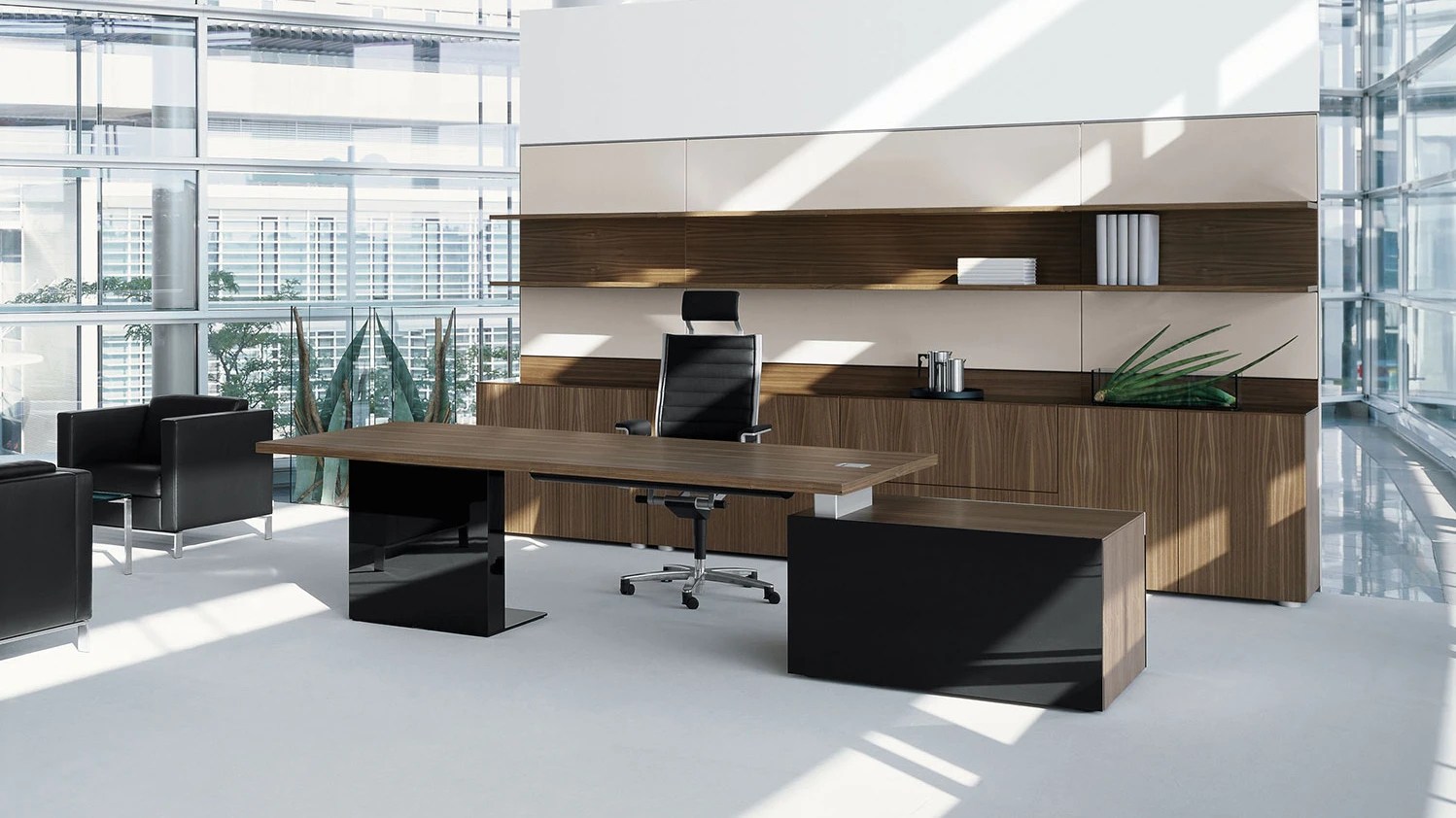
Over the last 50 years, where wood was used, it was also subjected to the necessity of polished functionality. Textiles on chairs and sofas were rare: Whenever hard materials were out of place, leather – which also has a smooth surface – dominated.
Stuff happens
The current redefinition of traditional office work and corresponding redefinition of traditional office spaces has created an opportunity to take a fresh look at the materials. Enter: textiles!
Because coolness and distance is not wanted everywhere; there is an increasing demand for a relaxed atmosphere and human interaction. Team meetings and talks with customers are more successful when held in an environment that allows or even emphasises the expression of emotion. Textiles offer advantages in this regard and can be seen with increasing frequency within the four walls of offices.
A new trend? Count me in!
Page through new catalogues and design reference books and you will immediately see: there is a liberating preference for EQ (emotional intelligence) over inhuman functionalism. It almost feels like a collective exhalation: We don't want metal chairs that keep us from relaxing. We need sofas, a living room atmosphere and fabric everywhere. Companies such as Google & Co. have demonstrated on a global scale how being childish at the office and can promote creative high performance. A tower of pillows anyone?
In a nutshell: The use of fabric serves as a medium for communicating different, more lively messages. And communication, both horizontal and vertical, is a key element of a well-functioning company. The areas in which communication occurs will continue to be functional, but they can also be human. In addition, the increasing density of workplaces means that employees need to communicate value and identity in a different way.
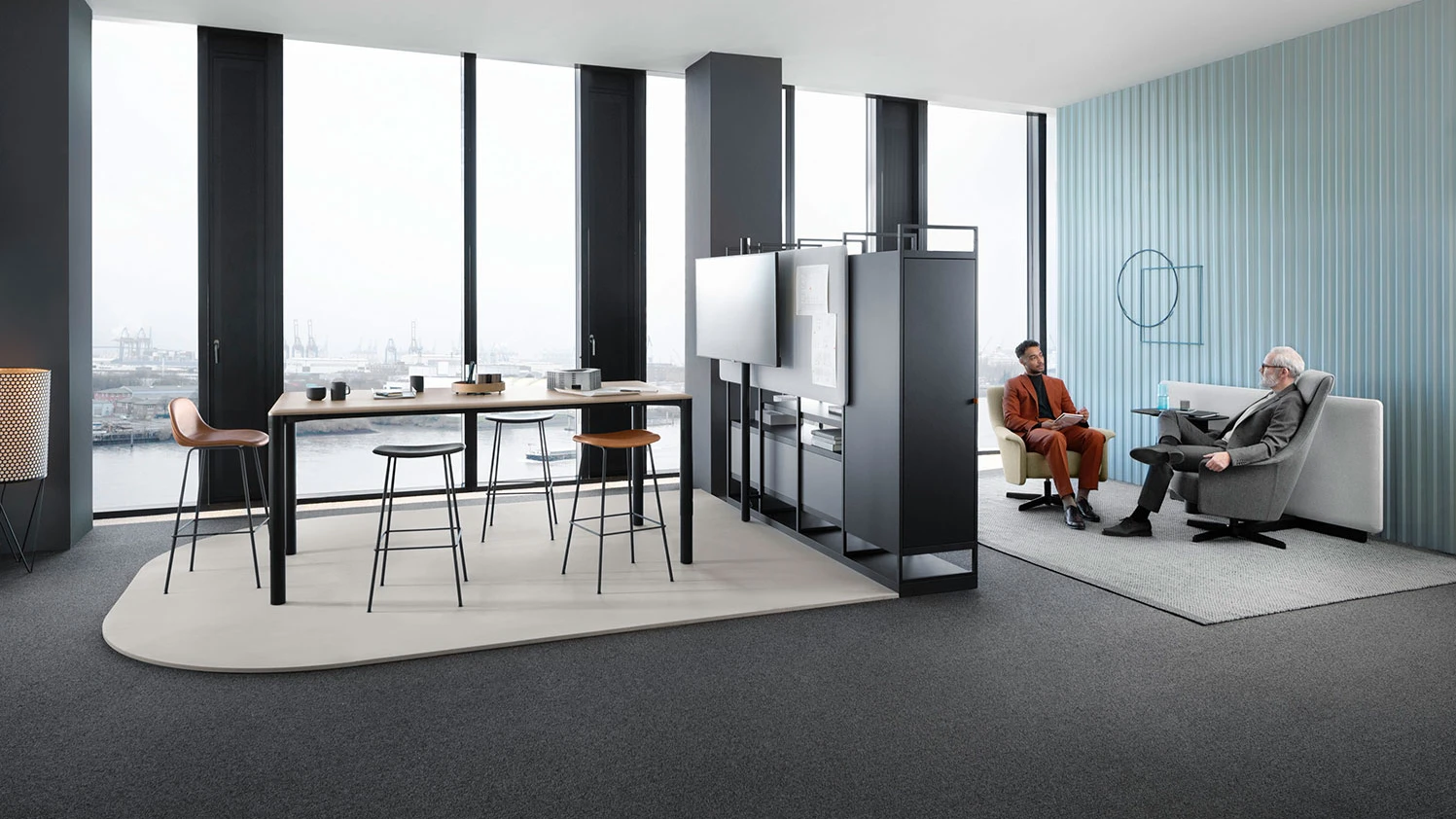
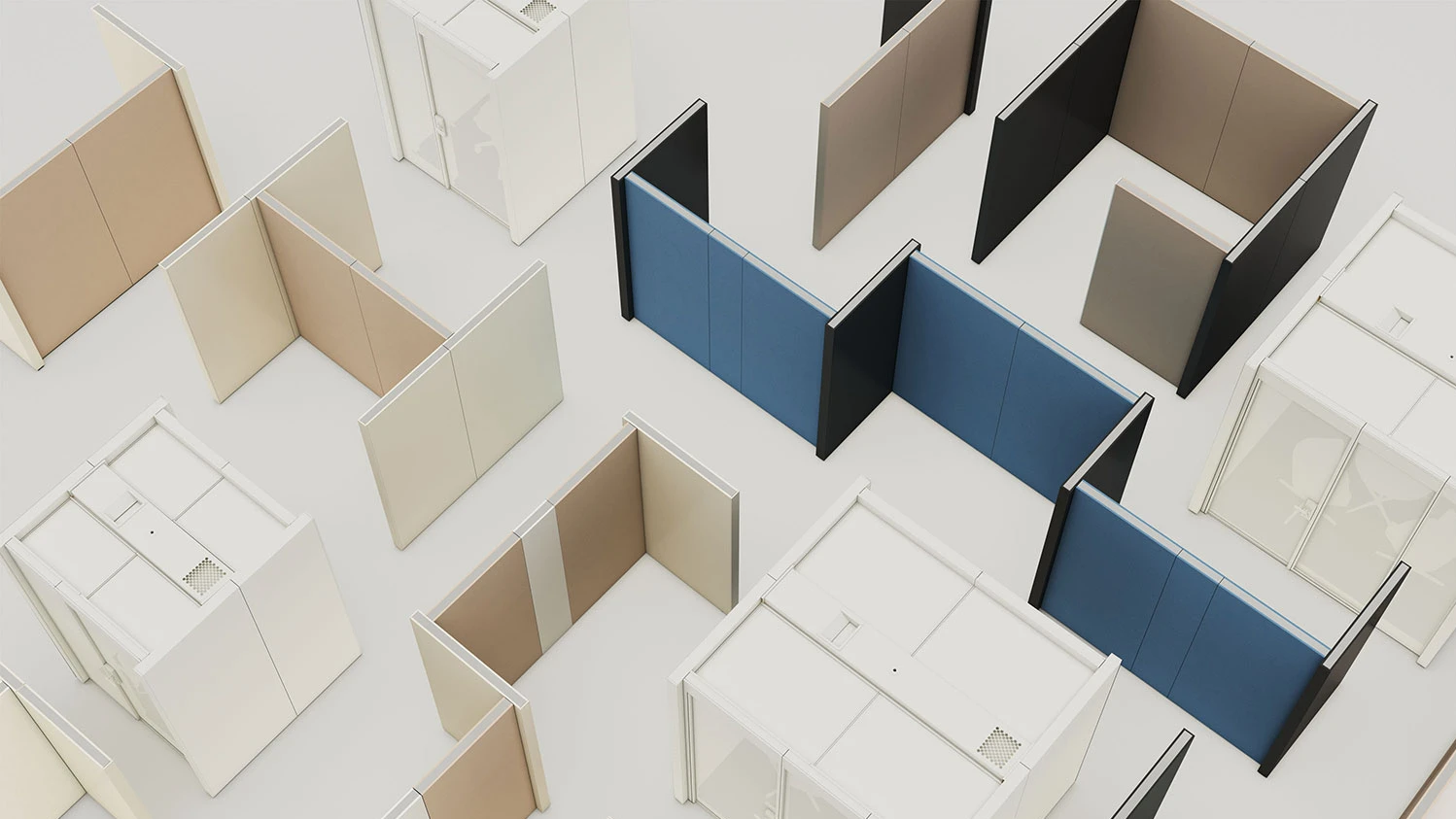
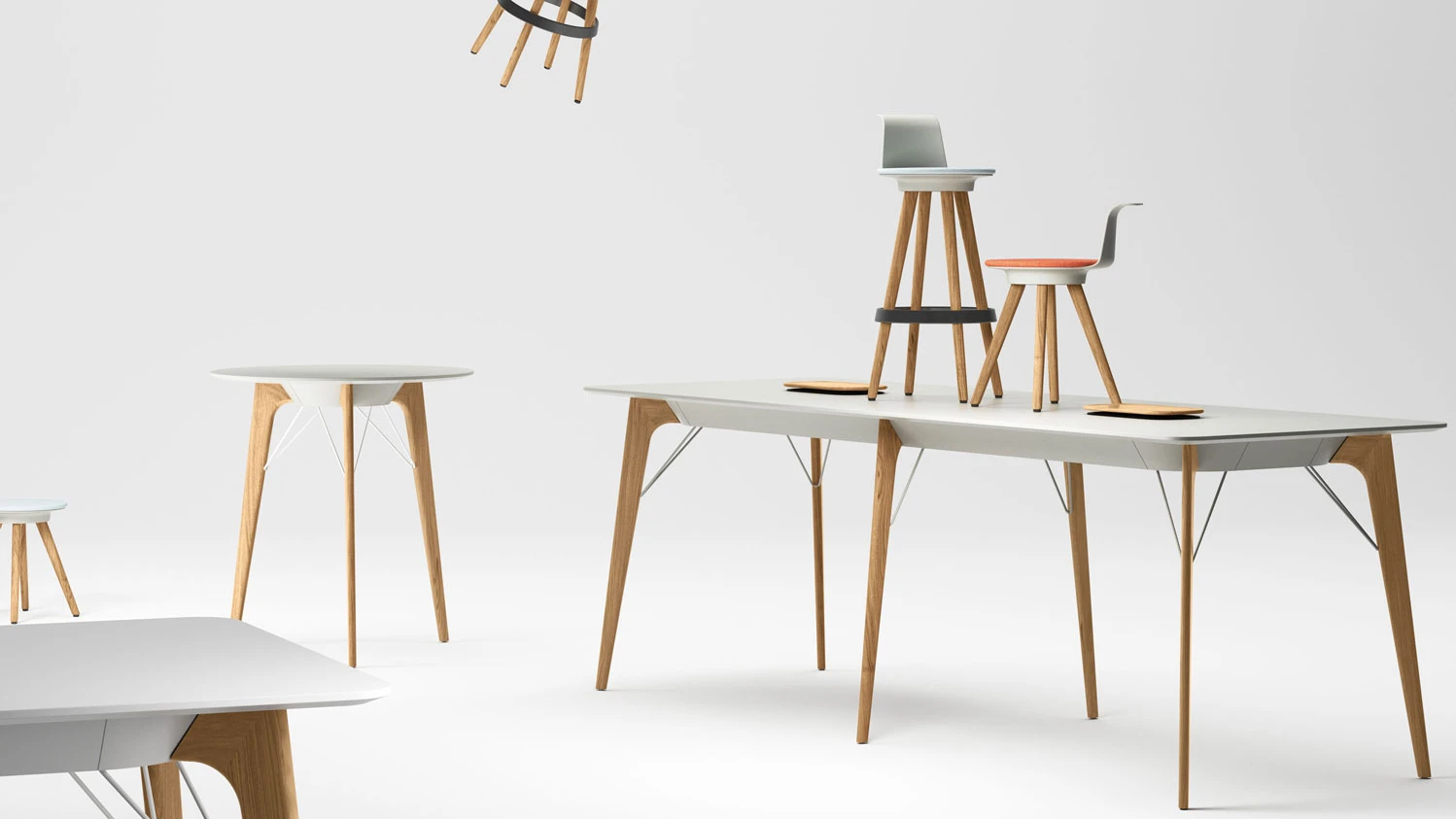
PARCS by Bene can be considered one of the forerunners of the new trend: A room-forming ensemble of furniture with the goal of creating an inspiring work environment for meetings, team work, presentations, waiting and relaxing. Of course, the fact that textiles play a major role is a matter of course.
Living in a material world
Whoever uses fabric material should use the best. In the case of PARCS, this led to a closer relationship between Bene and the Danish company, KVADRAT. In addition to the quality, there was also need for a comprehensive line of colours, textures, materials and patterns. The match was a good one: As a leading global player in its sector, KVADRAT is known and respected around the world for its fabrics used in offices and other interiors.
The company was founded in 1968 as a small textile firm and resides in Ebeltoft on the Danish East Coast, which is also where the warehouse with a total of 800,000 metres of fabric is located. KVADRAT has set up shop in 20 countries around the world, and 90 per cent of its overall sales are exports.
In recent years, KVADRAT has become an important player in design and art promotion in addition to producing textiles. One example is the "Textile Field" project by the highly successful designers Ronan & Erwan Bouroullec. KVADRAT is developing concept cars together with BMW.
A characteristic of KVADRAT is its careful selection of colours and patterns for its collection which some think reflects the clear light of Scandinavia and the ocean view offered by each one of KVADRAT's offices. Natural textiles and sustainable production are of great importance as illustrated by the ISO 14001 certification and several eco awards like the EU flower.
Material, functionality, effect
What is required of textiles and fabrics, particularly in the context of the office?
They primarily need to be fire resistant or at least hardly flammable. In addition, they need to be robust, which means scrub-resistant for upholstered furniture: Traces of wear should not show. This is measured by "scrubbing events." In one test procedure, the robustness of the material is measured by how many "events" it survives.
Biological considerations and the origin and processing of materials, yarns and dyes are also important. This is important not only for ecological reasons, but also because it helps to create a healthy office atmosphere. Biologically harmless natural products prevent the release of chemicals and thereby help create a productive, healthy atmosphere in the spaces in which work is performed.
Functionality involves a range of considerations such as harmonising with the design, an attractive appearance or pleasantness and sitting comfort. The body senses quality and the texture of the fabrics both consciously and unconsciously and reacts with positive emotions and a sense of well-being. The borders between functionality and effect are fluid. The feel and appearance, which includes both colours and patterns, as well as the visual elements of the texture and surface have a strong psychological effect when people enter the room and they immediately influence one's mood.
"Colour is permanently linked with texture and shape. It is more than just the pantone code," is the credo of textile designer Giulio Ridolfo, one of the numerous designers who help KVADRAT develop its materials. He is referring to the internationally used code of colours with its thousands of nuances created by the American company Pantone LLC.
This credo is also reflected in Bene’s seating furniture collection which boasts more than 350 colours. Mustard yellow and blue tones in various shades are presently à la mode, especially the blue-green tone cyan, as well as warm grey tones with an added touch of the colour lava.
But what colour goes with what?
If you don't trust your own feelings or just want some objective input, you can refer to the "Fabric Inspiration", a guideline that was developed by the PARCS designers of PearsonLloyd. "Fabric Inspiration" is a combined reference work: It provides a selection of approximately 45 contextually defined colours and demonstrates how PARCS can be ideally designed in terms of colour and texture.
This opens up new horizons for solutions to current office design issues. Let the stuff of your dreams become the fabric in your rooms.
Nicole Kolisch