'Action!'
Whether mainstream or auteur cinema, action or intimate theatre – cultural history is inherent in each film genre. Consequently, Bene elaborates on its own themes also in this genre. Office in film? Is there such a variable at all?First, read Laurids Ortner’s thoughts on condensed symbolism of the "office" played out on celluloid. Then, read a few film recommendations, ranging from classics to new releases.
The office in film
In a cinema, you should never sit past the fifth row. So you face the big screen without being able to see the left and right edge of the screen at the same time, but only if you turn your head slightly. Once the film starts, you seem to become part of the happenings, the images appear to stretch beyond the screen, coming together behind the spectator’s head. It takes a while to get used to this proximity, where you can only see details and everything else as an overview. But when a match is being lit with that sizzling sound, reminiscent of a snake creeping up behind one's ear, then the pleasurable viewing experience sets in that contents itself also with half understanding, while remaining on the edge of the seat.
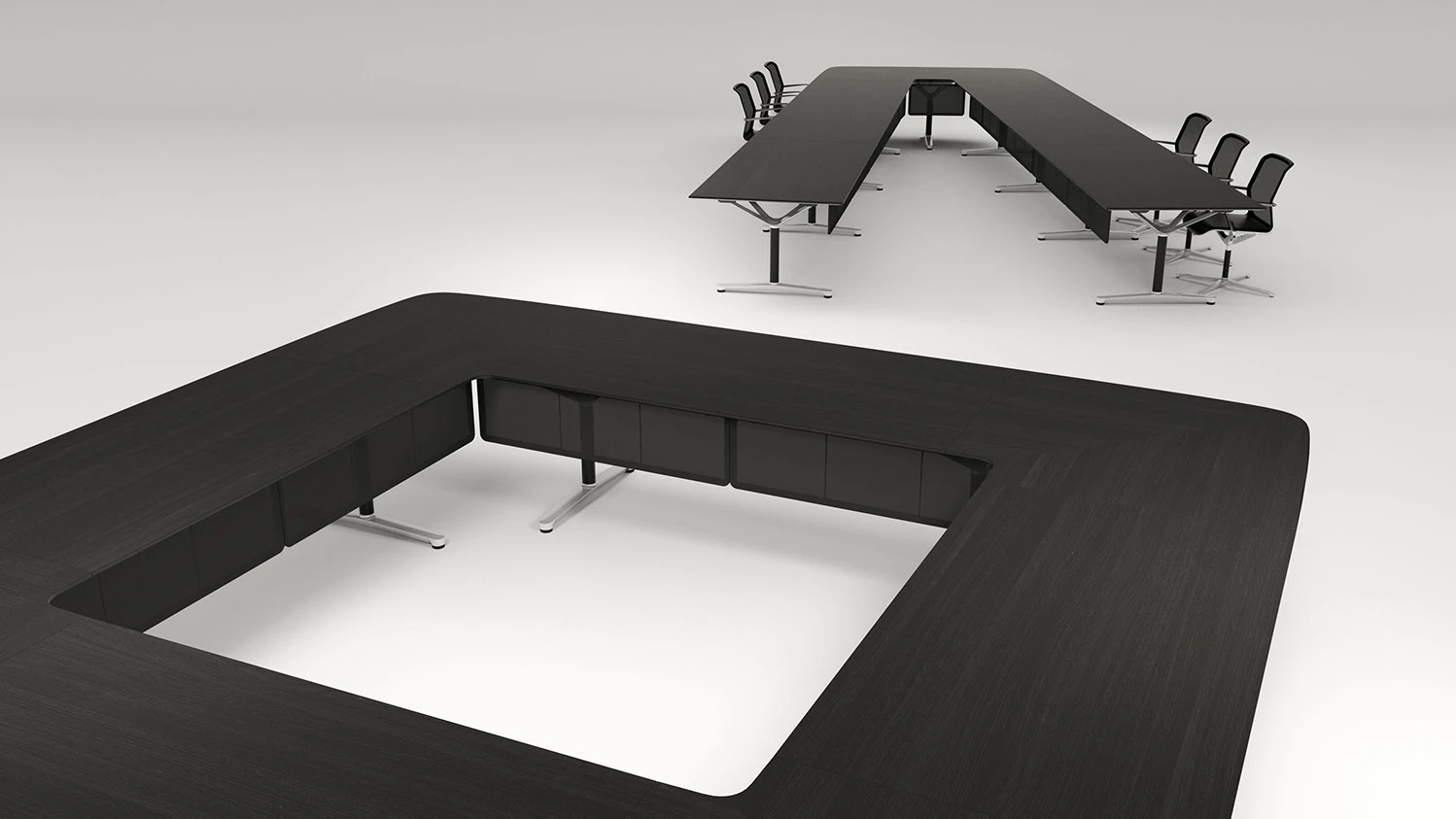
The camera peeks over the dark shoulder of a seated person to dive into the vast oval of the table, at low height, panning past papers, glasses, ashtrays and pens. Everything is bright, with strong contours and small shadows, as if it was noon at a sandy clearance. Far in the distance there is traffic noise, dangerously close the sound of a glass being placed on the table. The outlines of the oval clearance disappear in the darkness. A little lower, pale hands, and the entire scenery wrapped into a dark sea of expensive fabrics: a board meeting.
As seen in Michael Cimino’s "Year of the Dragon" (1984). Densely packed to the edge of the huge screen, a never ceasing flood of images, lurking inertia alternating with moments of utmost suspense. Sounds are expanded to inescapable weapons that attack the spectator’s organism on the second level.
In many similar films, the office plays a pivotal role. The events unfold at these locations and tend to always return there in the end. Hot spots that do not resemble humdrum workstations in the least. Their central location in the hustle and bustle of the city encourages one to act more sophisticated and more self-aware. Speedy and challenging scenarios outside also take place in a condensed format in these offices.
Even before architects, entrepreneurs and office furniture manufacturers tackled the topic of the "office", this location had been introduced in film as a hot spot contrasting with the "idyllic" homefront.
A relevant detail of film is its ability to portray plausible reality via characteristic details contrasting with our everyday reality. Complex phenomena can be observed that are rarely paid attention to as a result of their omnipresence. The city as city is such an example, just like its biggest market place: the office.
Laurids Ortner
A real classic: Changing office
Let’s stick with film classics and you will easily recall "office classics".
The Front Page is such a film. In Billy Wilder’s black comedy filmed in 1974, Jack Lemmon and Walter Matthau chase different pursuits of life. The plot and the set pertain to the 1920s – the editorial offices are dominated by the typical wooden style of the interwar years, the hectic atmosphere of the big city along with the cinematically dramatic chaos render a convincing image of that era.
The editorial offices of the Washington Post in "All the President´s Men" assume a completely different look. The plot takes place about 50 years later – however, the movie was filmed only two years after The Front Page – and turned the open-plan office of the 1970s indeed into a hot spot, where Nixon’s Watergate scandal became public. Dustin Hofman and Robert Redford could not have picked a better surrounding for their authentic performances. The atmosphere is practical and demure, realism down to every detail.
Not suited for team players
Private detectives and unsuccessful ex-cops such as Jakes Gittes in Roman Polanski’s "Chinatown" (1974) cut a less powerful figure in their lonesome struggles. Jack Nicholson hides in his shabby 1930s office until a seductive beauty and tough gangsters make him come out of his hiding spot. The fact that his office is devastated at some point can probably be attributed to the dramaturgy of the film – considering that his furniture wasn’t that bad after all….
The same goes probably for the Austrian interpretation of the theme, "Müllers Büro" (Müller’s Office) (1986), that became a real crystallization point for plot and directing.
Fisticuffs hardly ever take place in the distinguished British MI6 offices, at least not during meetings between 007 aka James Bond and his supervisor M. The office concept follows timelessness and even insignificance; nonetheless, important decisions are made here. It lends Ms. Moneypenny´s classic reception desk a human touch.
Visionary outlook – The offices of the next millennium
Even visionary filmmakers can’t do without the office as a hotspot. Can you recall the intimidating cubicle offices of the department of information retrieval in Terry Gilliam’s "Brazil" (1985)? Too restricting, too low, too dark, only connected via a pneumatic tube to the outside world. No wonder that Jonathan Pryce aka Sam Lowry chases the woman of his dreams even though his life is in danger – thanks God! – and of course in the end he gets her.
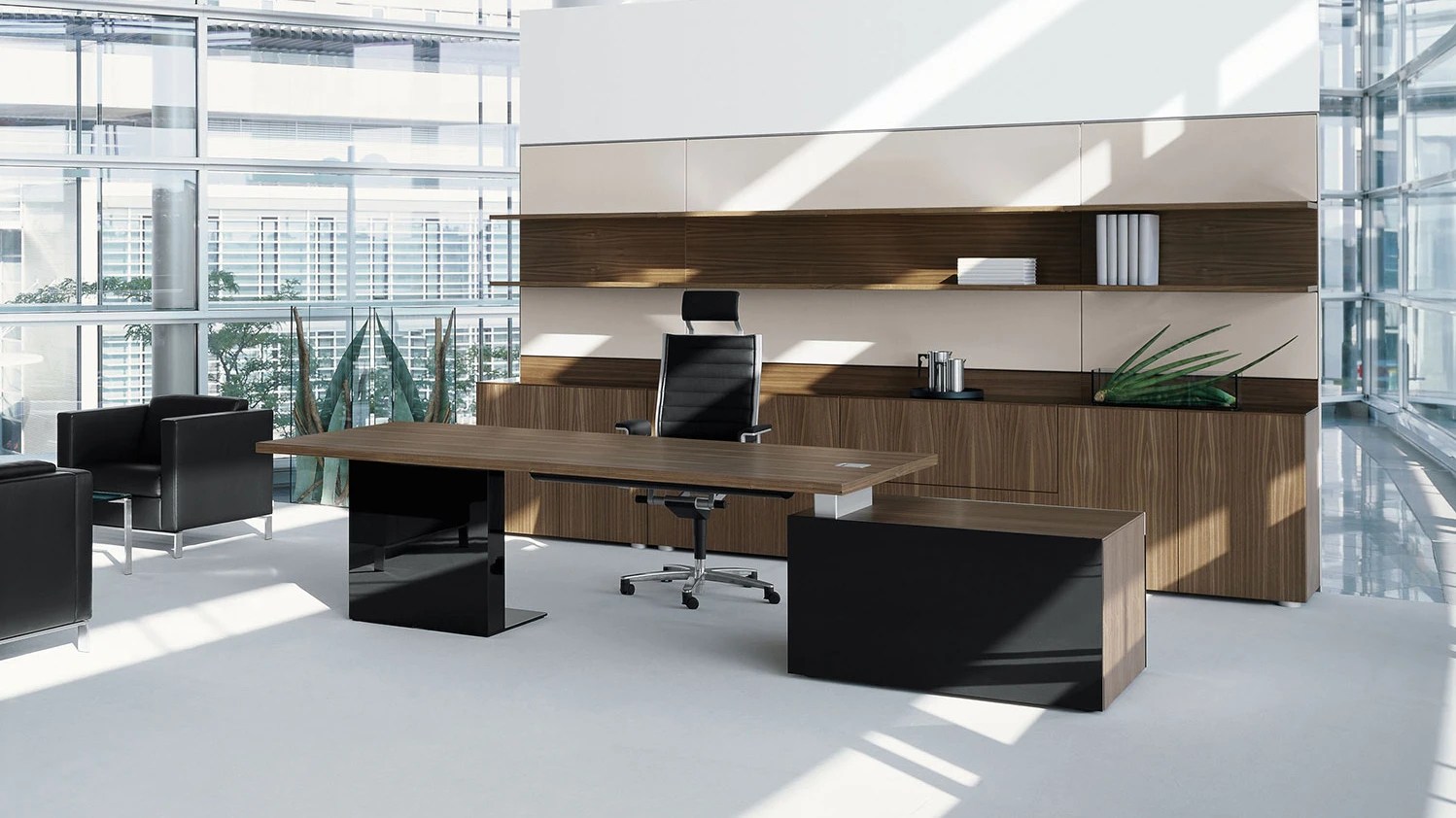
Human life is also endangered in 2019, at least according to Ridley Scott’s images in "Blade Runner" (1982). Overpopulation, destruction of the environment, acid rain, murdering replicants that populate the Earth. The only peaceful oasis with an unrivalled view of a subjected universe offers a scene in the Tyrell Corporation’s office. Clearly a management office! Such vast space can only be assigned to the general manager. Even Harrison Ford is impressed.
Modern status symbols or creating identity!
Offices in American productions strikingly tend to mutate into real status symbols. How often is the main protagonist’s move up or down the career ladder tied to a move into a larger or smaller office. In Cameron Crowe’s "Jerry Maguire" (1996) Tom Cruise gets the boot due to his unsuccessful performance – no longer a privileged private office, no breathtaking view from the 65th floor. What a loss!
As a contrast, the office of Gordon Gekko , portrayed by Michael Douglas in Oliver Stone’s "Wall Street" (1987), still draws appreciative looks in light of such a superb and impeccable portrayal of power, even though the movie was made 20 years ago.
The perfectly portrayed office setting is even able to transport irony – if you can still recall the office of the Californian film agent (Rob Lowe) in the hilariously cynical "Thank you for Smoking" by Jason Reitmann (2006): with Feng Shui symbols, Japanese Koi fish and the luxury of boundless eccentricity. Creating identity indeed!
Brigitte Schedl-Richter